The Unnoticed Might
of an Electrical Pole
That Runs a City Silently
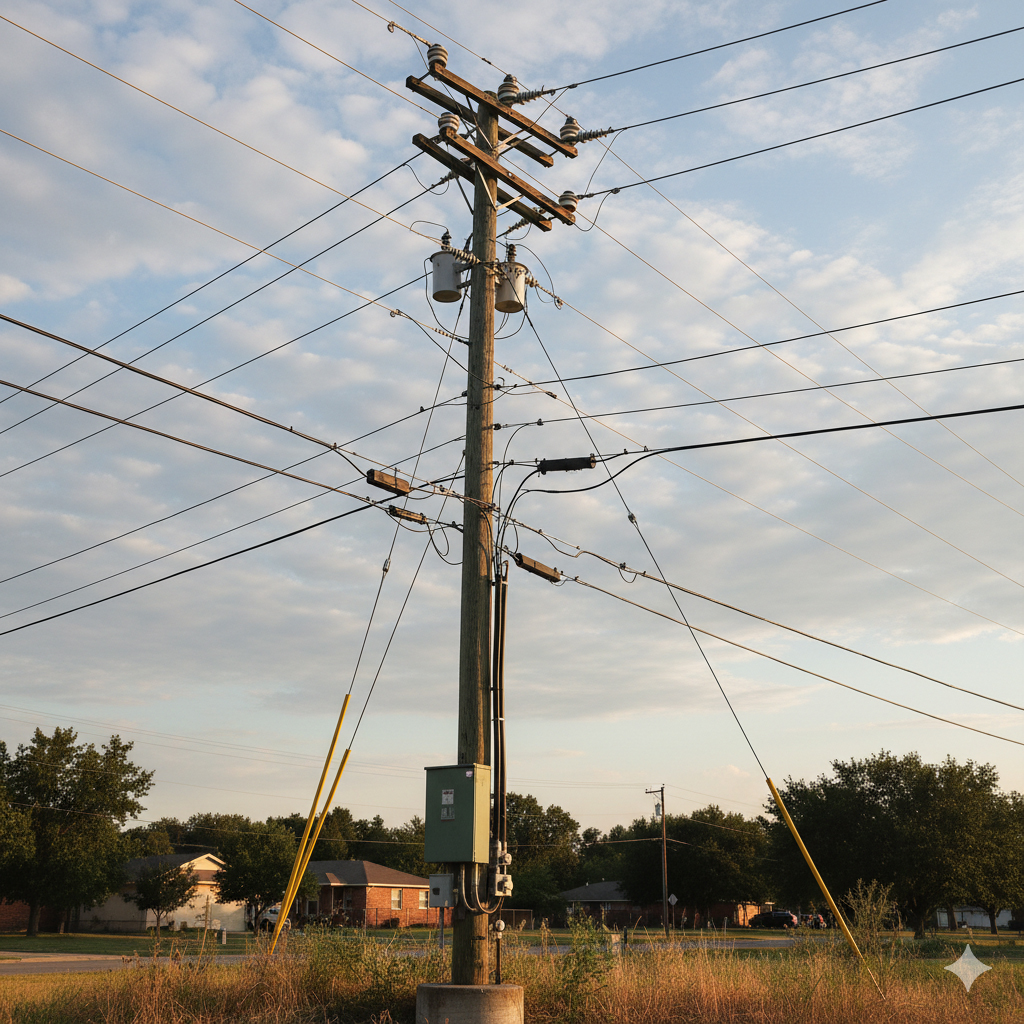
An electrical pole supports lighting, power flow, and public safety in every season — running an entire city silently in the background. Most people walk past without noticing, until something tilts, cracks, or loses alignment.
Share pole height, load requirement, and quantity — we'll confirm section, weight, and ₹/piece rate same day.
📋 Send EnquiryFill the contact form 💬 Join WhatsApp ChannelDaily rate updatesWhy an Electrical Pole Matters More Than Most People Realise
Distribution Network · Overhead Lines · Street Lighting · Power Routing
Electrical pole networks are one of the most essential parts of a functioning city. They hold overhead lines, support street lighting, and maintain safe power routing across homes, shops, hospitals, and roads. Most people pass by these structures without noticing them. Yet when one pole tilts, cracks, or loses alignment, the effect can spread quickly — disturbing conductor tension, reducing clearance, and creating maintenance requirements across multiple adjacent spans.
An electrical pole must do more than stand upright. It continuously handles dynamic cable tension, wind load, temperature movement, and public safety clearances — simultaneously, every day, without intervention. A wrong section size, poor foundation depth, or inadequate coating can lead to cable sagging, unstable voltage behaviour, and maintenance-heavy operations over years.
What Makes an Electrical Pole Different from a Regular Street Structure
Dynamic Load · Wind Resistance · Clearance Zones · Height Calculation
A regular roadside structure may only need static stability — it stands in one place and resists its own weight. An electrical pole must continuously handle dynamic cable tension that changes with temperature and load, lateral wind force that varies seasonally, and public safety clearances that are regulated by IS 5613 for different voltage levels and crossing types.
That is why pole height, cross-section diameter, and wall or flange thickness are selected through calculation, not by convenience. In dense neighbourhoods, lower spans and closer pole placement may be needed to maintain clearance over crowded roads. On wider arterial roads, clearance requirements increase. Therefore, one standard design cannot fit every location — and a pole specified for one route may be structurally or geometrically inadequate on another.
Minimum ground clearance per IS 5613 varies by voltage level (LT vs HT), crossing type (road, railway, navigable waterway), and urban vs rural classification. The clearance that must be maintained is at maximum sag — which occurs at maximum operating temperature, not at ambient installation temperature. A pole height calculation that ignores thermal sag produces a distribution line that fails clearance requirements every summer, even though it appeared adequate when commissioned.
Electrical Pole Material Choices and Their Long-Term Performance
Steel RSJ · Concrete · Wood · Fibre Composite · 20-Year Life-Cycle
| Material | Key Advantage | Long-Term Caution | Best Context |
|---|---|---|---|
| Steel RSJ | Clean geometry, light transport, visual corrosion inspection | Needs protective coating; accelerated corrosion at soil-air interface without maintenance | Urban networks, HT lines, multi-attachment and smart city poles |
| Prestressed Concrete | High mass stability, no corrosion coating needed, long heritage in rural LT networks | Internal cracks can propagate invisibly; heavy transport on narrow rural roads | Rural and semi-urban LT distribution with limited maintenance access |
| Wood | Low initial cost, legacy compatibility in older networks | Moisture and insect deterioration without regular chemical treatment | Low-load legacy lines, temporary installations |
| Fibre Composite | Lightweight, corrosion-resistant, good in aggressive environments | Surface damage during incorrect installation reduces long-term structural integrity | Coastal, high-humidity, or chemically aggressive locations |
Electrical Pole Foundation, Alignment, and Distribution Network Stability
Foundation Depth · Soil Compaction · Span Consistency · Chain Effect
Foundation — The Hidden Decision
Even a strong electrical pole section can fail early if the foundation is weak. Foundation depth, backfill compaction quality, and drainage planning around the base determine whether the structure stays aligned for years or begins the slow lean that precedes most distribution failures.
Small alignment errors often begin as minor visual tilt — a fraction of a degree noticed only in a careful inspection. Left uncorrected, that lean progressively changes conductor sag and clearance across adjacent spans. In rain-prone zones, poor soil support leads to gradual settlement. In traffic-heavy corridors, repeated vehicle vibration can disturb base integrity if installation quality is low.
For standard LT electrical poles 8–9m tall: minimum embedment = pole height ÷ 6, minimum 1.5m. For HT and tension poles: calculate from lateral design load. For waterlogged or soft soil: increase depth or use a concrete surround. Never use loose excavated soil as backfill — always use well-compacted granular material.
The Chain Effect in Distribution Networks
Power moves through a chain of supports. If one electrical pole section becomes unstable — through lean, foundation settlement, or accessory overload — the adjacent spans are affected. Conductor tension increases on one side and decreases on the other, disturbing the sag curve across multiple poles, not just the one that leaned.
Good pole quality and consistent installation maintain spacing, reduce sag variation between spans, and improve overall network reliability under daily load cycles. Rural lines face long-span wind stress across unshielded terrain. Urban networks face traffic vibration, higher accessory attachment density, and more frequent ground-level disturbance from nearby excavation. Both require context-specific design — the same pole section and foundation specification rarely serves both environments equally.
Electrical Pole Safety, Clearance, and the Risk of Unmanaged Attachments
IS 5613 Clearance · CCTV · Telecom Cables · Wind Drag · Center of Gravity
Safety and Clearance
The primary safety role of an electrical pole is simple: keep energised conductors at safe height and predictable alignment. If lines droop below the minimum clearance or pole spacing is incorrect, risk increases for vehicles, pedestrians, and maintenance crews — simultaneously and without warning.
Proper pole geometry also influences street lighting quality. A bent or misaligned lighting arm creates dark patches that reduce road visibility and compromise local safety at night. These secondary effects of poor pole condition are rarely attributed to the pole itself until an incident occurs.
Extra Attachments — the Invisible Load Shift
Modern electrical poles frequently carry internet cables, CCTV units, public address speakers, and signage well beyond their original design load profile. Each added item changes wind pressure, increases dead load, and shifts the pole's effective centre of gravity — often without anyone having reviewed the cumulative structural impact.
Without bracket planning and load distribution checks, the pole drifts toward progressive lean and hardware fatigue at crossarm bolts and stay wire anchors. This is one of the most common and preventable causes of electrical pole failure in Indian urban distribution networks.
A single CCTV bracket seems structurally trivial. Two broadband cable bundles seem minor. One festival banner seems temporary. Together, added to a pole already carrying 3–4 conductors, they can represent a 40–60% increase in wind load — pushing the total well beyond the original structural design basis. Always check residual capacity before any addition.
Weather Stress and Installation Errors That Shape Pole Performance Over Years
Thermal Fatigue · Corrosion · Span Errors · Voltage Quality
How Weather Weakens an Electrical Pole
Weather does not usually break an electrical pole in a single event. It weakens it gradually through mechanisms that are individually minor but cumulatively significant:
- Thermal cycling: daily expansion and contraction creates micro-fatigue at connection points, crossarm bolts, and hardware over years
- Monsoon moisture: softens soil around the foundation, allowing slight base movement that progressively widens the embedment hole
- Wind load: repeated lateral force accumulates structural fatigue at the base section even when no single storm appears damaging
- Coastal salt / industrial pollution: accelerates corrosion on uncoated or inadequately coated steel by 3–5× the normal rate
- Water ingress in concrete: carbonation of concrete over years reduces the alkalinity that protects embedded steel reinforcement, enabling internal corrosion without surface evidence
Installation Errors That Affect Voltage Quality
Incorrect span length, rushed pole levelling, poor bolt tightening at crossarms, or inconsistent foundation depth can create ongoing operational issues that persist for the entire service life of the installation. These include: line fluctuation from uneven conductor tension, repeated fuse trips from low-clearance contact points, and premature hardware wear from vibration at loose connections.
Correct spacing and tension planning at the design stage reduce rework and improve day-to-day grid stability — but the benefits are invisible when the work is done correctly. The cost of installation errors only becomes apparent after the line is energised and service complaints begin.
Span length verification before installation: 10 minutes per span. Foundation depth measurement before backfilling: 5 minutes per pole. Alignment check before conductor stringing: 3 minutes per pole. The cost of getting these right at installation is a fraction of the cost of post-commissioning rework — let alone post-failure emergency repair.
Future-Ready Electrical Pole Infrastructure in Growing Cities
Smart City · Multi-Service · 4G/5G · Sensors · Specification-First Design
Future-ready streets increasingly expect electrical poles to hold lighting controls, monitoring sensors, communication devices, and smart-city components — alongside the original power conductors. This means higher structural demands, tighter safety margins, and greater consequence for under-specification at the procurement stage.
Smart city projects now specify poles as multi-utility supports from the outset — with structural section, foundation depth, arm attachment points, and cable management systems designed for all planned loads simultaneously. Retrofitting structural capacity to an installed pole network is significantly more disruptive and expensive than specifying adequate capacity at the beginning.
Vishwageeta designs and supplies electrical poles keeping future load capacity in mind — so that the infrastructure does not become structurally inadequate within a few years of smart-city attachment accumulation.
Today's Electrical Pole
Power conductors, street light arm, telecom cable, CCTV bracket. Designed for known loads with some future margin.
Tomorrow's Electrical Pole
All of the above plus 4G/5G antenna, environmental sensor, smart lighting controller, EV management wiring, and emergency speaker. Needs multi-service structural specification from day one.
Practical Checklist for Electrical Pole Selection, Installation & Inspection
7 Points That Prevent the Most Common Long-Term Failures
- Select material for the specific environment: steel RSJ for urban multi-attachment and HT lines; concrete for rural LT with limited maintenance access; confirm coating specification for steel in all cases.
- Calculate height for maximum sag clearance: verify minimum ground clearance per IS 5613 at maximum operating temperature sag, not just ambient installation conditions.
- Confirm foundation depth from soil assessment: minimum pole height ÷ 6 for standard LT poles; deeper for HT, tension poles, or soft soil. Use compacted granular backfill, not loose excavated soil.
- Plan span spacing from route design calculations: conductor weight, design wind speed, sag limit, and clearance requirement — not field convenience. Verify before installation, not after stringing.
- Check structural capacity before any new attachment: every CCTV bracket, cable bundle, or lighting arm addition must be assessed against residual pole capacity and foundation stability.
- Apply corrosion protection at installation for steel poles: zinc-rich primer plus finish coat; 5–7 year inspection cycle in normal environments, 2–3 years in coastal or industrial areas.
- Schedule post-monsoon alignment checks: inspect for lean, foundation gap, and unauthorised additions after each monsoon season — early intervention costs a fraction of post-failure remediation.
Frequently Asked Questions
Electrical Pole — Alignment, Materials, Safety & Future
Vishwageeta Ispat — Raipur, Chhattisgarh
Vishwageeta Ispat is Raipur's trusted iron and steel supplier — manufacturing and supplying RSJ electrical poles, MS sections, TMT bars, structural steel, and all utility steel products. We supply with confirmed IS specifications, reliable dimensions, and competitive delivered rates across Chhattisgarh and Central India.
Need utility-grade electrical poles for distribution, street lighting, or smart city projects? Share pole height, load requirement, and quantity — we'll confirm section size, weight, current ₹/piece rate, and dispatch timeline same working day.