The Quiet but Necessary
Work of a Street Electric Pole
That Holds a Lane Together
A street electric pole looks like a plain shaft on the side of the road. Its job actually reaches into the everyday functioning of a whole neighbourhood — lighting, wiring, night safety, and reliable visibility for vehicles and pedestrians.
Share pole height, road width, lamp specification, and quantity — we'll confirm section, weight, and ₹/piece rate same day.
📋 Send EnquiryFill the contact form 💬 Join WhatsApp ChannelDaily rate updatesWhy a Street Electric Pole Holds More Responsibility Than Most Think
Lane Lighting · Local Distribution · Pedestrian Safety · Public Visibility
A street electric pole might look like a plain structure standing on the side of the road, but its job reaches deeper into the everyday functioning of a whole neighbourhood. People pass by, look at shop boards, watch vehicles squeezing through narrow lanes, but rarely anyone gives even two seconds to the pole that is literally holding the light above their head. The strange part is that if the pole is missing or even slightly damaged, the entire street suddenly realises how much it depends on it.
What looks like a straight steel or concrete shaft is actually a carefully balanced piece of engineering meant to handle wire load, lighting weight, wind movement, and sometimes even unexpected pressure from extra cables added later by local maintenance teams. A wrongly chosen pole height or thickness can disturb the lighting spread, create dark patches between pole spans, or cause wire sagging that leads to small but frequent power issues — none of which are usually traced back to the pole specification itself.
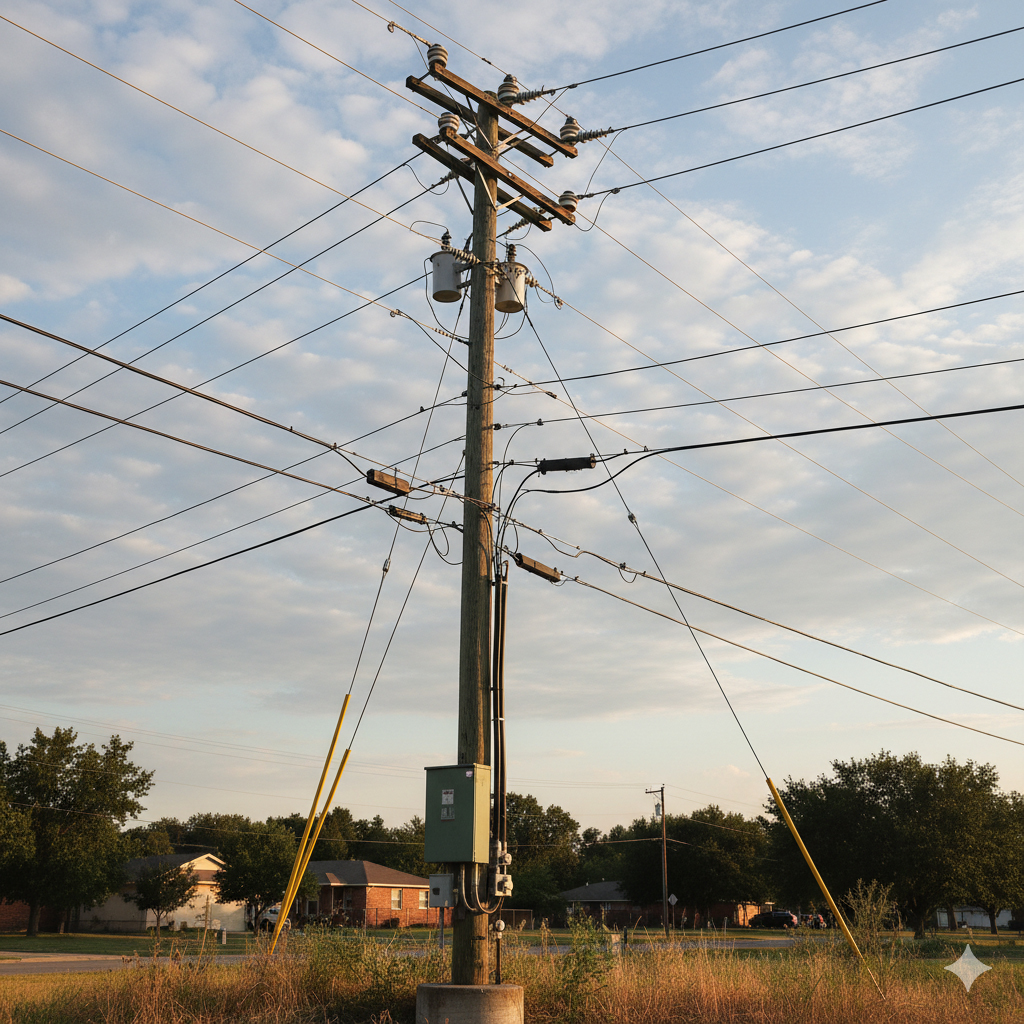
How a Street Electric Pole Is Different from Other Power Poles
Local Voltage · Lamp Support · Public Proximity · Context-Sensitive Height
A street electric pole is not built for heavy long-distance transmission. Its role is more street-facing and public-oriented. It deals with everyday distribution voltage levels, supports lamps and luminaires, carries local cable lines, and survives the constant strain of traffic, pedestrian movement, and shop activity around it. Compared to high-voltage transmission poles, the street version is shorter — but its responsibility for daily public night-time safety is significantly higher in absolute terms.
The pole needs to be tall enough to spread light evenly across the road width, but not so high that the illumination becomes weak and scattered at ground level. Too short is also risky — vehicles and shops often come dangerously close to the wires, and lamp glare creates visibility problems for drivers. Roads, lanes, marketplaces, and colony entries each require a different height-and-placement combination.
A pole that works well on a wide highway can completely fail on a congested residential lane. Generally: 7–8m pole for narrow colony lanes (4–5m wide), 9m for residential streets (6–8m wide), 11–12m for major arterial roads (12m+ wide). The pole, lamp wattage, and arm length must be selected together — not as separate procurement decisions.
Design teams focus heavily on diameter, base alignment, and structural section rather than only the visible exterior. The wrong pole on the wrong street produces dark patches, glare zones, and uneven lighting that no number of lamp upgrades can fully correct.
The Material Choices That Change How a Street Electric Pole Performs
Steel · Concrete · Wood · Fibre Composite · Environment-Specific Selection
Steel street poles have become common as cities modernise. They are lighter, more uniform in shape, and allow easier maintenance and accessory mounting. But steel needs proper coating — without a reliable galvanised or painted protective finish, rust spots begin appearing within a few seasons and slowly travel downward toward the soil-air interface where corrosion is fastest.
| Material | Strength in Street Use | Common Failure Mode | Best Context |
|---|---|---|---|
| Steel (RSJ / Tubular) | Light, uniform, easier accessory mounting, modern look | Rust spreading from soil-air interface without coating maintenance | Urban streets, smart city, multi-attachment lighting |
| Concrete (Prestressed) | Heavy, stable, manages heat and dust well | Hairline cracks over hot summers; harder to add accessories cleanly | Quiet residential colonies, established networks |
| Wood | Simple, low-cost, traditional in older areas | Moisture and insect damage; failure without warning under wind | Older town areas, rural connections, legacy networks |
| Fibre Composite | Lightweight, corrosion-free | Surface chipping during incorrect installation reduces strength | Selective use in coastal or chemically aggressive zones |
Concrete poles stand heavier — almost stubborn in nature — and they handle heat and dust better than many expect. They don't rust, but they develop tiny cracks over long summers that need attention if the pole carries extra fittings. Wooden poles still appear in older areas and rural connections, but they require careful monitoring since moisture or insects can weaken them faster than expected. Once weakened, a wood pole rarely shows symptoms until a strong wind bends it visibly.
Vishwageeta Ispat studies the environment before suggesting any pole type. A coastal area cannot depend on untreated steel. A dusty industrial belt needs a stronger structural section. A quiet housing colony does not require the same strength as a highway-side installation — and over-specifying just adds cost without improving service.
Ground Support That Keeps the Pole Upright — and the Lighting That Keeps the Street Safe
Embedment Depth · Soil Type · Lamp Geometry · Dark Patch Prevention
The Ground Support Decides Service Life
A street electric pole standing straight is not a matter of luck. The foundation holds it together more than any other factor. If the soil is loose, the pole develops a slow tilt and nobody notices until lights start shining unevenly on the street. Wet soil demands better anti-corrosion measures and deeper embedment. Rocky soil may vibrate more when heavy trucks pass, gradually shifting the foundation.
A tiny misalignment in the base creates large problems later. Wire tension changes, the arm holding the lamp pulls differently, and wind affects one side of the pole more than the other. All this becomes visible months after installation — even though the mistake started on day one.
The Public Night Safety Role
A street electric pole is practically the backbone of night-time safety. When lamps placed at the right height glow evenly, vehicles see the road properly, pedestrians move with confidence, and parked areas become less prone to incidents. Poor placement or weak fittings create dark patches that become risky for everyone walking through.
If the arm bracket of a lamp is even slightly angled wrong, the light falls too short or too wide. A tall pole creates dimness; a short pole creates glare. Everything from the lamp model to the angle of the holder depends on the pole's design. City planners rely heavily on durable street poles to control visibility — and indirectly, the pole participates in CCTV image quality and law-and-order outcomes too.
A misaligned street pole creates dark patches that reduce CCTV image clarity at night. Camera footage that should support investigation becomes unusable not because the camera is bad — but because the pole holding the lamp is slightly off-vertical and the lighting pattern is uneven.
Additional Devices a Street Electric Pole Now Carries — and Daily Challenges It Faces
CCTV · Speakers · Sensors · Vibration · Festival Loads · Posters
What a Modern Street Pole Carries
Earlier poles carried only one electricity line and one lamp. Now they routinely carry much more. Many streets use poles to hold CCTV cameras, public address speakers, signboards, motion sensors, emergency sirens, and sometimes internet aerial cables. Each added element increases load and shifts the pole's structural balance.
The pole must be strong enough to take these additional attachments without leaning to one side. When wind blows, a camera box or a cluster of cables creates lateral pressure. If the pole is not designed for distributed multi-attachment load, small repeated vibrations begin to affect long-term stability — fittings loosen, hardware fatigue accumulates, and the pole tilts before anyone connects the cause.
Daily Street Challenges Poles Deal With
A street electric pole faces continuous low-level disturbance:
- Vehicles brushing past the base in narrow lanes
- Vibration from passing buses and heavy trucks
- Posters glued and torn off, leaving residue and minor surface damage
- Temporary wires hung during festivals — added without structural review
- Sudden rainfall and intense summer heat, in the same week
- Dust accumulation that increases cable weight and wind drag
Concrete poles develop hairline cracks. Steel poles lose coating where it gets brushed by vehicles. Wooden poles absorb moisture more quickly than expected. Even cables become heavier when dust collects on them or when humidity rises. The pole must stay aligned despite all of this, every day, with no maintenance most years.
A pole carrying its design load year-round may be temporarily overloaded by 50% or more during festival lighting installations — strings of lamps, decorative banners, and aerial wires hung casually from any convenient pole. Most municipal pole specifications do not formally account for this seasonal extra load, which is why post-festival inspection rounds are worth doing.
Installation Errors That Cause Long-Term Street Problems
Spacing · Setback · Levelling · Lamp Orientation · Bolt Tightening
If a street electric pole is placed too close to the road, it becomes a hazard for turning vehicles and risks repeated minor impacts at the base. If it is placed too far back from the kerb, the lamp may not cover the road evenly — leaving the centre of the road brighter than the edges where pedestrians actually walk. Spacing between consecutive poles must follow correct lighting calculations or visibility becomes patchy, with bright zones under lamps and dark zones between them.
A downhill street may need different spacing from an uphill one, because the lamp throw geometry is not symmetric on slopes. A slightly rotated pole shifts the lamp orientation by a few degrees and changes the lighting angle, making the street appear unevenly lit even though every component is technically functioning. The base plate must be perfectly level, the bolts must be uniformly tightened to specification, and the pole section thickness must match the cable load. These details are small but professionally significant — even a minor oversight grows into a visible problem within 12–24 months of installation.
1. Pole vertical with plumb level — not just visually upright. 2. Setback from kerb matches drawing — typically 0.5–1.0m. 3. Pole-to-pole spacing matches lighting calculation — uniform across the route. 4. Lamp arm angle aligned correctly to road centreline. 5. Base plate bolts tightened uniformly to specification torque, not by feel.
The Future Role of a Street Electric Pole as Cities Develop
Smart Lighting · Sensors · EV Charging · Solar · Information Displays
A street electric pole is no longer just a support for wires. With the rise of smart urban systems, poles are increasingly expected to carry sensors that adjust lighting based on ambient conditions, monitor traffic flow, record environmental data, or provide emergency communication tools. Solar lamps have become common in many municipal projects but they still depend on a structurally solid pole to hold the panel, battery housing, and lamp assembly steady through wind and weather.
What Today's Street Pole Needs to Support
- LED lamp fixture (energy-efficient, lighter than older HPSV)
- Local distribution cables for nearby connections
- CCTV bracket and camera
- Optional public address speaker
- Festival lighting attachment points
What Tomorrow's Pole Will Add
- Smart lighting controller (auto-dim, adaptive)
- Air quality sensor and noise monitor
- Small-cell 4G/5G antenna mount
- EV slow-charging point at base
- Information display panel (route, weather, alerts)
This means the street pole of the future needs more structural strength, better corrosion resistance, and a design that can manage cumulative weight without bending or fatiguing too soon. Vishwageeta Ispat considers these expectations while manufacturing poles, because municipal demand profile is shifting every year — and retrofitting an installed pole network to handle smart-city loads is significantly more expensive than specifying capacity correctly at procurement.
Practical Checklist for Street Electric Pole Selection & Installation
7 Points That Prevent the Most Common Street-Lighting Failures
- Match pole height to road width and lamp specification: 7–8m for narrow lanes, 9m for residential streets, 11–12m for arterial roads. Pole, lamp wattage, and arm length selected together as a system.
- Choose material for the local environment: steel for urban smart-city applications with multi-attachment plans, concrete for stable residential colonies, with appropriate corrosion or crack monitoring built into maintenance schedule.
- Plan foundation depth and concrete surround for the soil: deeper for soft, waterlogged, or vibration-prone locations near major roads. Compacted granular backfill — not loose excavated soil.
- Fix pole-to-pole spacing from lighting calculations: uniform spacing along the route, modified only for slope, curve, or junction geometry. Avoid field improvisation that creates dark patches.
- Confirm setback from kerb edge: typically 0.5–1.0m. Far enough that turning vehicles do not strike the base; close enough that the lamp covers the road evenly.
- Verify pole vertical alignment with plumb level before energising: visual upright is not vertical. A 2–3 degree lean from day one becomes a major lighting and safety problem within a year.
- Plan for accessory additions at procurement, not after: CCTV, telecom, smart-city sensors should be in the pole specification's load profile from the beginning, not added retroactively to undersized poles.
Frequently Asked Questions
Street Electric Pole — Height, Material, Foundation & Smart City
Vishwageeta Ispat — Raipur, Chhattisgarh
Vishwageeta Ispat is Raipur's trusted iron and steel supplier — manufacturing and supplying RSJ street electric poles, MS sections, TMT bars, structural steel, and all utility steel products across Chhattisgarh and Central India. We supply with confirmed IS specifications, reliable dimensions, and competitive delivered rates.
Need utility-grade street electric poles for road lighting, colony installation, or smart city projects? Share pole height, road width, and quantity — we'll confirm section size, weight, current ₹/piece rate, and dispatch timeline same working day.