RSJ Pole Specification — A Practical Field Guide
Specification is not paperwork — it is what decides whether an RSJ pole stands straight for 30 years or starts leaning after the first harsh season. This guide covers everything that actually matters: section geometry, sizes, coating, foundation, and the installation mistakes no one talks about.
Share length, section, quantity, and coating needs — we map specs and send a clear quote.
Request Quote24-Hour Response Join WhatsApp ChannelDaily Rate Updates Call: 9200049000Direct Sales Line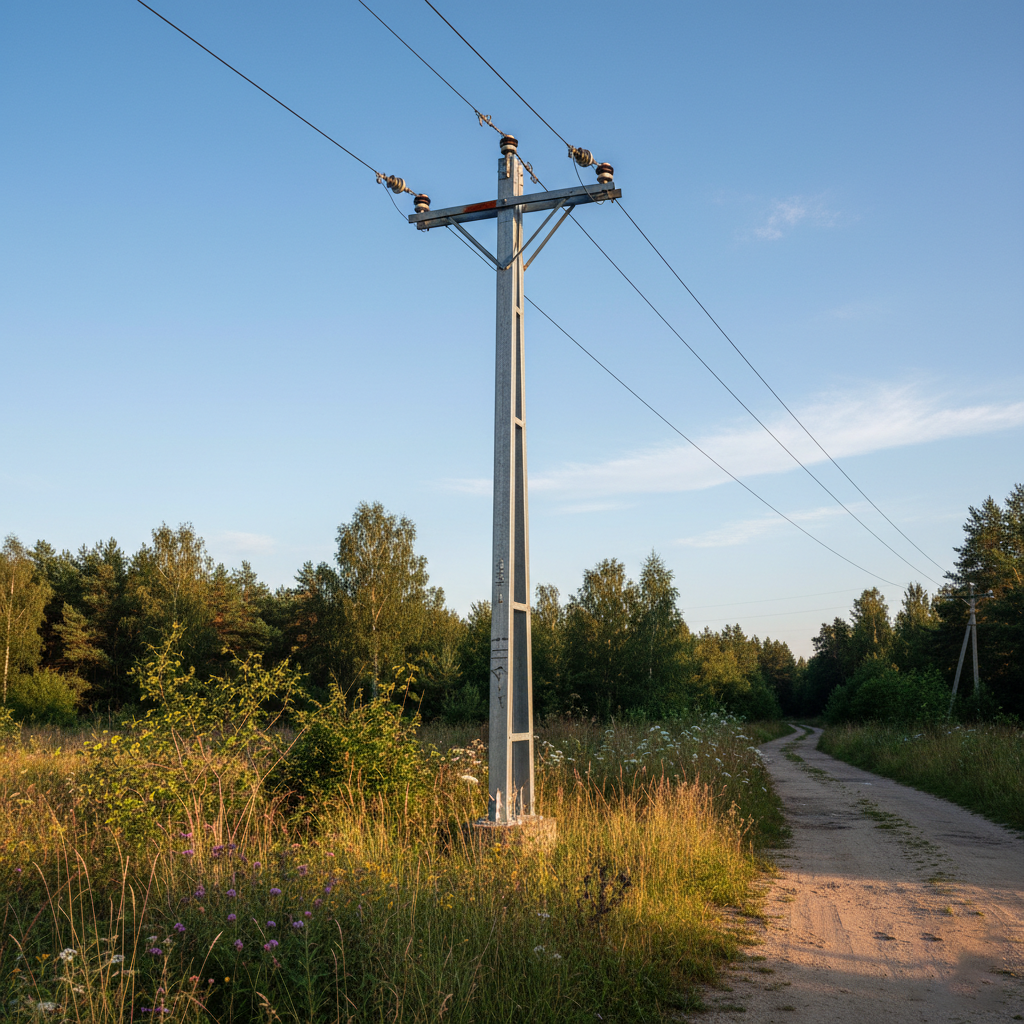
Fig 1 — RSJ poles quietly hold distribution networks across industrial zones, highways, and rural routes — reliable workhorses when correctly specified and installed.
RSJ poles are not glamorous — they are stubbornly useful. Across industrial zones, road-side grids, and rural electrification work, they quietly hold distribution networks year after year. The specification determines whether that reliability is 5 years or 40 years. Miss one variable — coating thickness, foundation depth, web dimension — and the pole becomes a maintenance story rather than infrastructure that just works.
- What complete RSJ pole specification includes — The seven elements that matter
- Section geometry and how it provides strength — I-section logic, web and flange
- Common sizes, lengths, and selection factors — 9m, 10m, 11m and what drives the choice
- Galvanizing and corrosion protection — Why coating quality equals service life
- Installation — where good specs still fail — Foundation, compaction, alignment
- Where RSJ poles are used across India
- Specification checklist for buyers and site teams
- FAQ — RSJ pole specification questions
What Complete RSJ Pole Specification Actually Includes
Seven Elements • From Section to Foundation • Why Each One Matters
Many purchase orders for RSJ poles specify only height and a rough "I-section" description. This leaves six other critical variables undefined — and each one has real consequences for performance, cost, and service life. A complete specification removes ambiguity at the ordering stage, which prevents arguments, rework, and early failure later.
The Seven Specification Elements
- Section designation: exact IS 808 profile — ISJB, ISLB, ISMB with web/flange dimensions confirmed
- Length: 9m, 10m, or 11m above ground — total pole length includes embedment below ground
- Steel grade: IS 2062 E250 or E350 as required by structural demand
- Weight reference: kg/m from supplier's current chart — for transport and cost planning
- Coating: hot-dip galvanizing to IS 2629 with coating weight, or paint system specification
- Fabrication details: bracket holes, earthing boss, base plate if required
- Foundation guidance: embedment depth and soil compaction requirement for the specific site
Never accept "9m/10m I-section pole" as a complete specification. Always confirm the section designation, kg/m, and coating requirement before finalizing — these three items alone prevent the majority of specification disputes and wrong material deliveries.
Most "material quality issues" reported on site are actually specification gaps or installation shortcuts. When specs are clear and installation follows them, RSJ poles rarely fail. When specs are vague or installation is rushed, even good material becomes a maintenance problem.
Section Geometry and How It Provides Strength
I-Section Logic • Web and Flange • Why Small Dimension Changes Matter
An RSJ pole is rolled from mild steel into an I-shaped cross-section — two horizontal flanges connected by a vertical web. This geometry creates a highly efficient structural member: most of the steel is placed at the maximum distance from the neutral axis (in the flanges), where it contributes most to bending resistance. The web resists shear forces. The result is high stiffness and bending resistance relative to the weight of steel used.
What Web and Flange Dimensions Control
- Web depth: increases the distance between flanges — primary driver of bending stiffness; deeper web = stiffer pole without proportionally more steel
- Web thickness: resists shear forces and local buckling — critical in high-load applications with point attachments
- Flange width: wider flanges improve lateral stability and provide more surface area for attachments
- Flange thickness: controls compressive and tensile resistance under bending — thicker flanges improve section modulus directly
- Combined effect: even 1–2 mm changes in any dimension change kg/m, stiffness, and section modulus simultaneously
Why Consistent Rolling Matters
If web or flange dimensions vary from the nominal specification due to inconsistent rolling — even by 1–2 mm — the pole's stiffness and load capacity deviate from what was designed. This is why Mill Test Certificate (MTC) verification matters, especially for utility applications where structural performance over decades is critical.
Two poles that look identical can have different web thicknesses if sourced from different mills or batches without specification verification. The visible difference is zero. The structural difference can be 15–20% in bending capacity.
Common Sizes, Lengths, and What Drives the Choice
9m, 10m, 11m • Section Series • Length vs Height • What Determines Selection
Common RSJ pole lengths in India center around 9, 10, and 11 meters above ground. These are not arbitrary — they reflect clearance requirements, span practices, and handling logistics that have become established through decades of distribution network construction. But within each length, the section choice determines how much load the pole can carry.
Length Selection Drivers
CEA RegulatedRequired clearance height from CEA regulations (voltage-dependent), span length and resulting sag, terrain type and traffic profile, local utility authority preferences, and future load addition expectations all determine what length is correct for a specific application.
Section Series Selection
Load DependentLight duty — ISJB or ISLB sections for streetlights and LV distribution. Medium duty — ISMB for MV distribution and transformer support. Heavy duty — ISWB or special sections for high-tension and industrial applications. Wrong series = wrong structural margin.
Length vs Total Pole Length
Often ConfusedA "10m pole" typically refers to 10m above ground. Total pole length includes the embedment depth — typically 1/6 to 1/5 of total length below ground. So a 10m above-ground pole may need an 11.5–12.5m total section. Confirm total length vs above-ground height with your supplier.
Uneven terrain, shallow rock layers, and unpredictable slopes create conditions where some pole types perform poorly. RSJ poles can accommodate certain stress behavior variations in challenging terrain better than uniform-section alternatives. Many field teams in hilly regions prefer RSJ poles because installation flexibility and structural predictability are easier to manage than with heavier concrete alternatives.
Galvanizing and Corrosion Protection
Hot-Dip Galvanizing • IS 2629 • Environment-Specific Requirements • Coating Life
Steel without corrosion protection in an outdoor utility environment does not last. The zinc layer from hot-dip galvanizing acts as both a physical barrier and a sacrificial protection — even where the zinc coating is scratched or damaged, nearby zinc areas continue to protect the underlying steel through galvanic action. This is why galvanizing dramatically extends RSJ pole service life compared to paint systems alone.
Standard Specification
- IS 2629: Indian Standard for hot-dip galvanizing — defines coating weight, uniformity, and adhesion requirements
- 610 g/m²: standard minimum zinc coating weight for structural steel sections in outdoor applications
- Uniformity: coating must be continuous — any bare spots are potential corrosion initiation points
- Adherence test: coating must withstand specified bend/adhesion test without flaking
- Documentation: galvanizing certificate should accompany all coated poles on request
Environment-Specific Considerations
- Coastal zones: salt spray significantly accelerates zinc consumption — consider heavier coating (≥850 g/m²) or additional epoxy/paint topcoat
- Industrial belts: chemical environments may require supplementary paint/epoxy systems over galvanizing
- Base zone protection: ground-line zone (where pole enters soil) is the highest corrosion risk area — ensure coating is intact and embedment zone is correctly prepared
- Long-life planning: coating quality in harsh environments matters as much as steel grade for total service life outcome
Installation — Where Good Specifications Still Fail
Foundation Depth • Soil Compaction • Alignment • The Four Mistakes That Cause Leaning
A perfectly specified pole, correctly galvanized, from a reputable supplier, can still become a leaning maintenance problem if installation is careless. Most leaning poles are installation failures, not material failures. Understanding the four common installation errors helps project teams brief and supervise erection correctly.
❌ Installation Mistakes That Cause Leaning
- Inadequate foundation depth — shorter embedment than required for soil type and pole height creates insufficient overturning resistance. Monsoon waterlogging makes this critical: saturated soil has significantly lower bearing capacity than dry soil at installation time
- Poor soil compaction — loose or uncompacted backfill settles after rain and irrigation cycles, reducing embedment resistance progressively until visible tilt appears
- Uneven or rushed backfilling — filling one side before the other creates an initial lean during installation that is difficult to correct after concrete sets or soil compacts
- Wrong lifting and handling — improper crane rigging or uncontrolled lifting can twist the I-section before installation, compromising the web's load axis alignment with the conductor direction
✅ Correct Installation Practice
- Calculate embedment depth correctly — use 1/6 to 1/5 of total pole length as minimum, adjusted for soil bearing capacity, wind zone, and cable load. Increase depth in loose or monsoon-prone soils
- Compact backfill in layers — fill in 150–200mm layers with compaction between each. This prevents differential settlement after installation
- Check plumb before backfill completion — verify vertical alignment while access is still possible; correct small deviations before they become permanent
- Use correct rigging for lifting — slings at appropriate points along the pole, not just at one end. Avoid sharp bends or point contacts that can mark or deform the section during erection
Where RSJ Poles Are Used Across India
Distribution Networks • Industrial Zones • Rural Electrification • Special Terrain
RSJ poles appear in a wider range of applications than most buyers realize. Their combination of structural efficiency, ease of transport relative to concrete, fabrication flexibility, and predictable performance makes them the preferred choice across several distinct use contexts.
Distribution Networks
Primary UseLV and MV distribution lines along road corridors, residential areas, and industrial access roads. Multi-cable routes where brackets and hardware attachment flexibility matters. RSJ sections accept additional attachments more easily than tubular poles as network loads evolve.
Industrial & Renewable Projects
Growing UseIndustrial parks for multi-circuit wiring routes; solar and wind farm array wiring where regular pole layout and predictable section properties simplify engineering. Construction site temporary lighting grids where installation speed and eventual removal matter.
Rural & Difficult Terrain
Where They ExcelRural electrification routes where transport of heavy concrete poles is impractical. Hilly terrain, uneven slopes, and shallow rock conditions where foundation adaptability is important. Remote sites where replacement sections need to be transported in manageable lengths.
Specification Checklist for Buyers and Site Teams
Pre-Order Verification • Site Readiness • Reduce Rework and Disputes
| Spec Item | Why It Matters | Common Mistake | Ask Supplier / Site Team For |
|---|---|---|---|
| Section Designation | Controls stiffness, bending resistance, and load capacity | Specifying only height — "9m I-section" without section designation | Exact IS 808 designation: ISJB/ISLB/ISMB + size |
| Length (above ground) | Clearance and routing requirements — directly affects CEA compliance | Assuming above-ground height equals total pole length | Above-ground height + total pole length including embedment |
| kg/m Reference | Transport load, crane planning, and material cost calculation | Confusing kg/m with total kg — underestimating transport requirements | kg/m from current supplier chart for confirmed section |
| Steel Grade | Strength margin, consistency, and performance under design loads | Not confirming grade to project structural requirement | IS 2062 grade confirmation + MTC if required |
| Coating / Galvanizing | Service life in outdoor environment — critical for 25–40 year target life | Accepting "galvanized" without confirming coating weight (g/m²) | IS 2629 compliance + coating weight specification |
| Fabrication Details | Site fit-up speed, fewer field changes, alignment with brackets and hardware | Brackets and holes mismatch discovered at installation — rework and delay | Hole pattern, bracket specifications, base plate if required |
| Foundation Guidance | Prevents leaning, settlement, and post-monsoon failures | Shallow foundation, assumed standard depth, poor compaction discipline | Site-specific embedment depth recommendation based on soil and load |
If you don't lock specifications before ordering, the project pays for the ambiguity later through rework, delays, and early maintenance. Ten minutes on the specification saves ten days on the problem.
• Bureau of Indian Standards (BIS) — IS 808 (I-sections), IS 2062 (steel grade), IS 2629 (galvanizing)
• Central Electricity Authority (CEA) — Safety regulations and clearance requirements
• Ministry of Power, Government of India — Distribution network guidelines
FAQ — RSJ Pole Specification Questions Answered
Common Questions • Spec Clarity • Coating • Installation
Vishwageeta Ispat — Raipur, Chhattisgarh
Vishwageeta Ispat supplies RSJ poles, I-sections, structural steel profiles, and utility infrastructure materials to distribution projects, contractors, and engineering teams across Chhattisgarh and Central India. We supply to IS 808 and IS 2629 standards with full documentation — MTC and galvanizing certificates on request. Transparent landed-cost quotations. Same-day commercial response for enquiries with full specification details. Pan-India dispatch.
Share length, section preference, quantity, coating requirement, and delivery site — we map specifications and provide a confirmed quote within 24 hours.