Deck Sheet Slab System — The Quiet Upgrade That Made Slabs Faster
Deck sheets replaced slow shuttering, created composite action with concrete, and changed how modern slabs are cast. Here's the complete practical guide to how they work, what profiles to choose, and why installation discipline is the whole game.
Share span, thickness, profile, and quantity — we help pick the right profile and plan dispatch.
Request Quote24-Hour Response Join WhatsApp ChannelDaily Rate Updates Call: 9200049000Direct Sales Line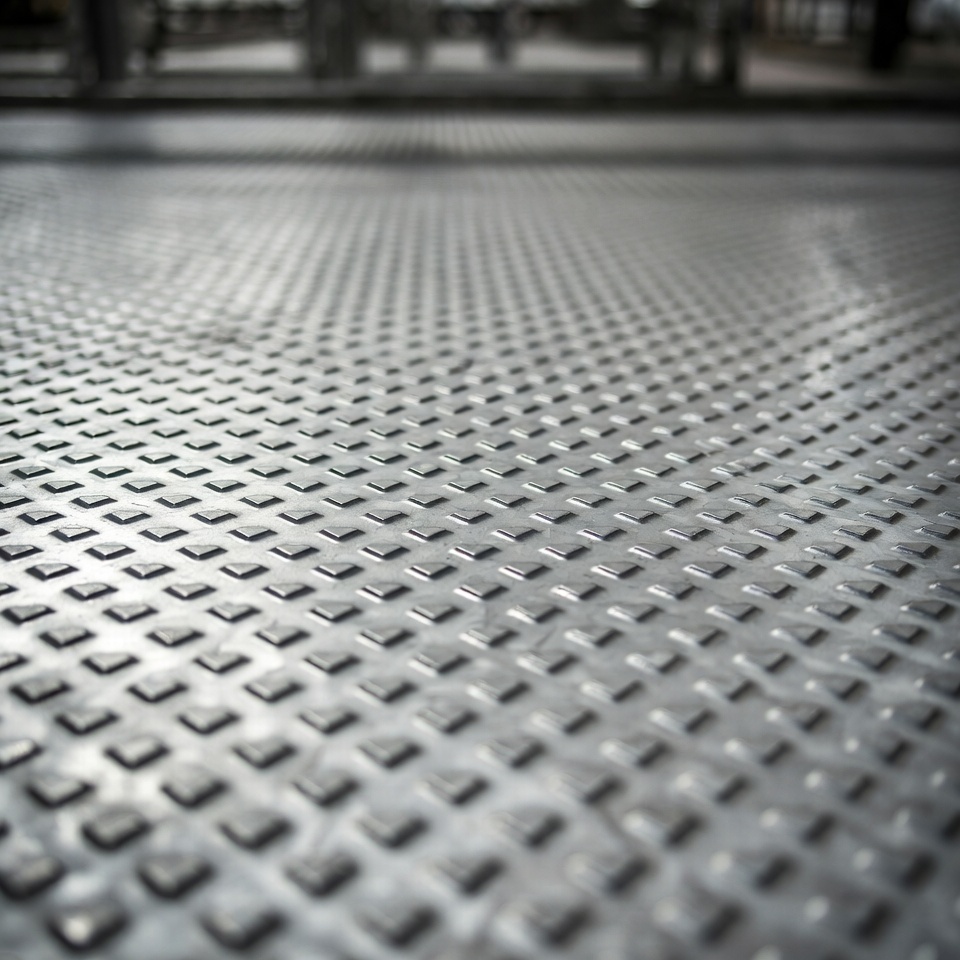
Fig 1 — Deck sheet as permanent formwork: supports wet concrete during casting, then bonds with it permanently to create a composite slab system.
A decade ago, many sites still depended on wooden shuttering, endless scaffolding, and large crews just to set up slab work. Deck sheets slipped in quietly and changed all of that. They act as permanent formwork during casting — eliminating setup and de-shuttering cycles. After curing, they bond with concrete to create a composite slab where steel handles tension and concrete handles compression. The result is faster construction, cleaner spans, and better structural predictability than conventional slabs.
- What a deck sheet actually does — during and after casting
- Steel + concrete composite action explained — Why the rib geometry matters
- Profiles, thicknesses, and selection logic — 0.8mm to 1.6mm, high-rise vs warehouse
- The four key benefits of deck sheet slabs — Speed, strength, fire, cost
- Installation — where the system still fails — Mistakes and correct practice
- Future developments in deck sheet systems
- FAQ — Deck sheet slab system questions
What a Deck Sheet Actually Does
During Casting • After Curing • Two Roles • One Sheet
A deck sheet plays two distinct structural roles at different stages of the construction process — and understanding both is what separates good deck sheet specification from uninformed selection.
Deck sheet slabs are faster primarily because they remove an entire phase from the construction schedule — traditional shuttering setup, propping, concrete pour, curing wait, and de-shuttering. The deck sheet is the shuttering, and it never comes down. This single change compresses timelines, reduces manpower requirements, and eliminates the weather risk window that open scaffolding creates.
Steel + Concrete Composite Action Explained
Rib and Groove Bonding • Tension and Compression Division • Why It Works
A deck sheet looks simple from below — a corrugated steel sheet. But the ribs and grooves are engineered geometry that creates mechanical bonding with concrete. Once the slab cures, both materials function as one solid structural unit. Neither alone is as efficient as both together.
Profiles, Thicknesses, and Selection Logic
Rib Depth • Thickness Range • Application Match
Deck sheet profiles are not interchangeable — different rib depths, corrugation patterns, and thicknesses create different structural performance characteristics. The correct profile for a warehouse with long spans and forklift traffic is fundamentally different from the correct profile for a residential high-rise floor.
| Profile Type | Rib Depth | Typical Thickness | Best Application | Key Advantage |
|---|---|---|---|---|
| Low Profile | 38–50mm rib | 0.8–1.0 mm | Short spans, light loads, residential | Minimal concrete volume, lower dead load |
| Medium Profile | 50–75mm rib | 1.0–1.2 mm | General commercial, medium spans | Good balance of span capability and concrete use |
| Deep Profile | 75–100mm+ rib | 1.2–1.6 mm | Warehouses, industrial, long spans | Maximum span capability, fewer support beams |
| High-Rise Grade | Medium-deep | 1.2–1.6 mm | Multi-storey buildings, heavy live loads | Vibration performance, fire resistance confidence |
Profile selection must follow structural design calculation — not site preference or general practice. The wrong profile for a span and load combination creates a slab that looks complete but is under-designed for its lifetime loading. Always confirm profile selection with your structural engineer before ordering.
The Four Key Benefits of Deck Sheet Slabs
Speed • Strength • Fire Performance • Cost Efficiency
Construction Timeline Compression
Deck sheets eliminate shuttering setup, propping, and de-shuttering — three phases that typically consume 30–40% of traditional slab construction time. Fix the sheets, pour concrete, move to the next floor. In multi-storey projects, this compression compounds across every floor cycle.
Composite Strength and Span
The composite slab achieves higher bending resistance per unit weight than a conventional reinforced concrete slab of equivalent thickness. This allows longer spans between supporting beams, reducing beam count and opening up flexible floor plans — particularly valuable in warehouses and commercial buildings.
Concrete Thermal Protection
In a fire event, the concrete above the deck sheet provides thermal mass and insulation, slowing heat transfer to the steel and delaying the critical temperature at which steel loses structural capacity. This composite protection can improve fire resistance rating compared to unprotected steel elements. Final fire resistance depends on slab design and applicable codes.
Reinforcement and Dead Load Reduction
Because the deck sheet contributes to tensile capacity, many designs reduce bottom reinforcement requirements. This lowers material cost directly and also reduces the total dead load on supporting beams and columns — which can further reduce those structural member sizes. The combined effect on project economy can be significant in multi-floor buildings.
Installation — Where the System Still Fails
Five Critical Mistakes • Correct Practice • Treat as Structural Work
A perfectly specified deck sheet from the right profile and thickness can still fail if installation is careless. Deck sheet installation is structural work — not roofing sheet fixing. The difference in discipline between the two approaches is the difference between a high-performing composite slab and a liability.
❌ Mistakes That Compromise the System
- Misalignment between sheets — creates weak joint lines and stress concentration at slab boundaries. Sheets must align correctly at ribs before any concrete is placed
- Missing or insufficient fasteners — allows movement during wet concrete pour. Concrete pressure is substantial; unfastened sheets deflect and permanently deform
- Poor side-lap locking — gaps at sheet overlaps become permanent weak points in the composite slab; never hidden once concrete covers them
- Missing props for longer spans — unpropped sheets during casting may deflect under wet concrete weight, permanently affecting slab soffit flatness and composite behavior
- Trades walking on unsecured sheets — damages the rib profile and fixing integrity before concrete placement; compromises composite bonding geometry
✅ Correct Installation Practice
- Align sheets correctly before any fastening — check rib alignment over full span length; correct misalignment is impossible after fixing
- Install all fasteners per specification — typically at every rib at end supports and at alternate ribs at intermediate supports; never skip or reduce fixing points
- Lock all side laps — confirm side-lap fixing at specified intervals before any concrete work begins; inspect all laps before pour
- Install propping for required spans — confirm with structural design whether temporary propping is required during casting; install before any concrete is placed
- Protect installed sheets before pour — restrict access, use proper platforms for trade movement across the sheet surface
Future Developments in Deck Sheet Systems
Stronger Grades • Better Coatings • Smart Integration
Deck sheet development continues on several fronts simultaneously. The product has proven its construction value — future improvements focus on extending service life, expanding application range, and integrating with smart building systems.
Material and Protection Advances
- Higher-strength steel grades: thinner sheets capable of longer spans and lighter slabs without compromising load capacity
- Better galvanization systems: improved coating processes for greater corrosion resistance in humid and coastal construction environments
- Enhanced rib geometries: profile optimization through FEA modeling to maximize composite bond efficiency at reduced sheet thickness
- Fire-rated coatings: intumescent and other fire-reactive coatings that improve fire resistance rating directly on the sheet surface
Smart Integration
Advanced projects are beginning to embed monitoring capability into structural slabs. Vibration sensors, strain gauges, and even fiber optic monitoring cables embedded during concrete placement create slabs that can report structural health data over their service life.
Deck sheets provide a natural support structure for pre-installing sensor elements before concrete placement — a capability that would be significantly more difficult to implement in conventional reinforced concrete slabs. This integration potential makes the deck sheet system increasingly relevant to smart building design.
FAQ — Deck Sheet Slab System Questions
Common Questions • Composite Action • Profiles • Installation
Vishwageeta Ispat — Raipur, Chhattisgarh
Vishwageeta Ispat supplies deck sheets, structural steel sections, MS pipes, angles, channels, and all construction steel products for building, infrastructure, and industrial projects across Chhattisgarh and Central India. For deck sheets — share your span requirement, floor loading, and quantity and we'll help identify the right profile and thickness for your project. Competitive pricing, quality documentation, and same-day commercial response.
Need help selecting the right deck sheet profile for your slab span? Our team provides specification support alongside the quote.