Why Builders Always Check the Angle Weight Chart
The angle weight chart is not just a table — it controls steel billing, prevents order mismatches, supports transport planning, and avoids costly project delays. One small check before ordering saves time and money on site.
Share size (A×A×t), length (6m/12m), and quantity — we'll respond with weight estimate and clean quote.
Request Quote24-Hour Response Join WhatsApp ChannelDaily Rate Updates Call: 9200049000Direct Sales Line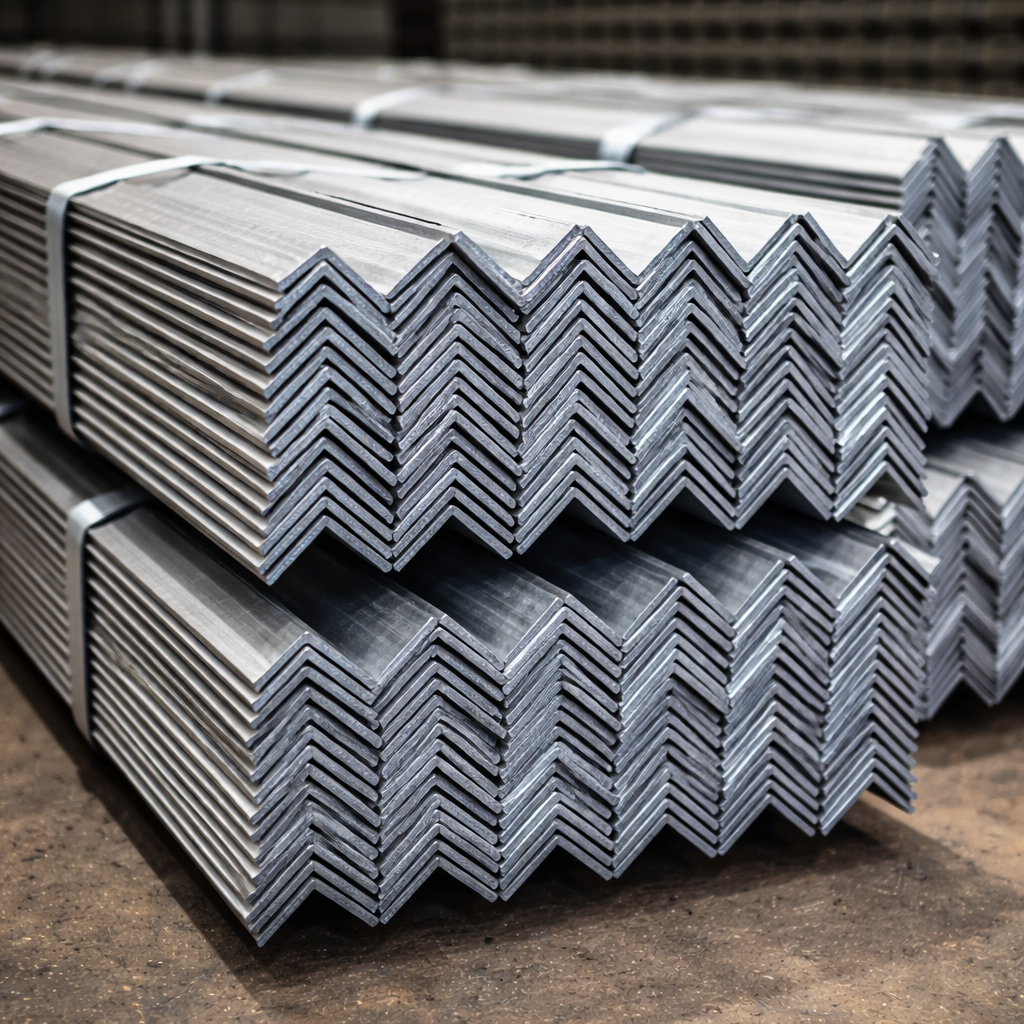
Fig 1 — MS angles are used in frames, trusses, shelves, racks, and industrial structures — and their weight drives every downstream planning decision.
In construction, angles are everywhere — frames, trusses, shelves, racks, and industrial structures. Yet the angle weight chart is one of the most underused planning tools in the procurement workflow. Contractors who skip it end up ordering too much or too little steel — both of which delay projects and waste money. The chart's kg/m value is the one number that makes cost estimation, transport planning, and supplier comparison accurate rather than guesswork.
- What the angle weight chart actually gives you — kg/m and the formula that follows
- How angle weight per meter is calculated — L-section geometry and the formula
- Factors that affect angle weight — Leg size, thickness, tolerance
- Why weight matters beyond just cost — Structural safety and selection logic
- How builders and fabricators use the chart — Procurement, transport, timelines
- Market context — weight as the stable reference
- Pre-order verification checklist
- FAQ — Angle weight chart questions
What the Angle Weight Chart Actually Gives You
kg/m • The Only Formula You Need • Why It Drives Every Downstream Decision
An angle weight chart lists MS equal and unequal angle sizes with their weight per meter (kg/m). This single number — kg/m — is the starting point for every planning calculation in a project using structural angles. Get it wrong, and everything downstream is wrong: the quote, the transport plan, the labor allocation, and the total project cost estimate.
Contractors and fabricators who reference the angle weight chart before every order avoid the two most common and expensive procurement errors: ordering too little (project halts, emergency re-orders with premium freight) and ordering too much (excess stock, locked capital, storage problems). One number prevents both outcomes.
How MS Angle Weight Per Meter is Calculated
L-Section Geometry • Thickness Effect • Formula Derivation
An MS angle has an L-shaped cross-section. Unlike a flat plate or square bar, the area calculation must account for both legs while subtracting the corner overlap where they meet. Even a small change in thickness creates a larger weight change than most buyers expect — because thickness affects both legs simultaneously.
Total Weight (kg) = kg/m × Length (m)
Project Total (kg) = kg/m × Length × Quantity
Factors That Affect Angle Weight
Leg Size • Thickness • Length • Manufacturing Tolerance
The Three Sizing Variables
- Leg size (A): bigger legs mean more steel area in both legs — kg/m increases proportionally. A 75 mm leg carries significantly more material than a 50 mm leg even at the same thickness
- Thickness (t): the highest-impact variable. Even a 1 mm increase in thickness raises both legs simultaneously — the weight effect is amplified. In bulk orders (hundreds of meters), a 1 mm thickness difference creates a large total weight and cost variance
- Length: does not change kg/m but determines total piece weight. Confirm standard available lengths (typically 6 m or 12 m) before planning cut lists and order quantities
Manufacturing Tolerance
Even correctly specified angles carry a manufacturing tolerance on thickness and leg dimensions per IS 808. This creates slight variation between theoretical chart weight and actual delivered weight. For billing-critical applications or large quantity orders, request the Mill Test Certificate (MTC) which confirms actual section properties and can be used as the billing basis.
Steel prices change daily — rate per kg fluctuates with market conditions. But kg/m stays constant for a given section size and grade. This makes the weight chart the reliable, consistent base for budgeting even when market rates are moving.
Why Weight Matters Beyond Just Cost
Structural Safety • Stiffness • Dead Load • Right Section Selection
Weight in a structural angle is not just a billing number — it is a proxy for the section's structural capacity. A heavier angle carries more steel area, which means higher stiffness, better bending resistance, and more reliable long-term performance. But this cuts both ways.
Too Light
Under-SpecifiedInsufficient stiffness for the applied load. The angle may deflect, vibrate, or gradually deform over time. In load-bearing applications, this compromises structural safety. In rack or frame applications, it causes misalignment and damage to stored goods.
Too Heavy
Over-SpecifiedWastes material and budget. Adds unnecessary dead load to the structure and its supports. Increases transport weight and handling effort on site. Fabrication cutting and welding become more demanding. None of this adds useful structural capacity — it just costs more.
Correctly Specified
OptimisedStructural performance matches design requirements. Budget is controlled. Transport load is predictable. Fabrication is efficient. The structure performs safely through its design life without excess material cost at any stage of procurement or construction.
How Builders and Fabricators Use the Angle Weight Chart
Procurement • Transport • Fabrication • Project Timeline Protection
Different roles in a construction project use the angle weight chart for different decisions — all at different stages. Understanding how each role uses it shows why the chart sits at the center of project steel planning, not just the estimating spreadsheet.
❌ What Happens Without the Chart
- Procurement based on visual sizing or last-project memory — section actually supplied has different kg/m than assumed
- Transport vehicle overloaded because total weight was underestimated — unloading at site becomes a problem
- Fabrication shop runs out of material mid-project — emergency re-order with premium freight delays timeline by days
- Quote comparison between suppliers fails because price is compared per piece, not per kg — lower "price" actually has lighter section
- Billing dispute at project end because total kg on invoice doesn't match contractor's rough estimate
✅ What Happens With the Chart
- Procurement specifies exact section designation + kg/m — supplier confirms match before dispatch
- Total project weight calculated (kg/m × length × qty) before ordering — transport vehicle capacity is matched correctly
- Fabrication shop has exactly the material needed — no shortage, no excess, no emergency orders
- Supplier quote comparison on per-kg basis — identifies the actual cost difference between sections
- Billing reconciliation is straightforward — total kg on invoice matches calculated order weight
Step-by-Step for Contractors
- Step 1 — Identify section from drawings: confirm leg dimensions and thickness (e.g., 75×75×6)
- Step 2 — Look up kg/m from chart: or calculate using 0.00785 × t × (2A − t)
- Step 3 — Calculate total weight: kg/m × total length requirement in meters
- Step 4 — Estimate material cost: total weight (kg) × current rate per kg from supplier
- Step 5 — Plan transport: confirm vehicle capacity covers total weight with margin
Worked Example
A small fabricator needs storage racks using 40×40×5 mm angles, 150 meters total.
- kg/m: 0.00785 × 5 × (80 − 5) = 2.95 kg/m
- Total weight: 2.95 × 150 = 442 kg
- At ₹65/kg: material cost ≈ ₹28,730
- Transport: standard 1-MT mini vehicle is sufficient
- Without chart: guessed order = likely 20–30% short or over
Market Context — Weight as the Stable Reference
Price Fluctuation • kg/m Stays Constant • Why the Chart Remains Relevant
Steel prices fluctuate — sometimes daily, sometimes weekly — based on raw material costs, import parity, demand cycles, and seasonal factors. The rate per kg that a supplier quotes today may differ from last month's rate by 5–10% or more during volatile periods.
Through all of this, kg/m stays constant for a given section size and grade. The weight chart does not need to be updated when steel prices change. This makes it the reliable, stable foundation for budgeting — even when market rates are in motion. Multiply the constant kg/m by whatever the current market rate is, and the cost estimate remains accurate and up to date.
When a supplier provides a clear weight chart alongside their quotation — showing kg/m for each section they are offering — it signals consistent product quality and transparent pricing. It allows you to verify that the section being supplied matches the specification, not just the size description. Reputable suppliers like Vishwageeta Ispat maintain updated angle weight references for all stocked IS 808 sections on request.
Pre-Order Verification Checklist
Confirm Before Placing Order • Five Checks That Prevent Every Common Angle Procurement Error
| Check | Why It Matters | Typical Mistake | What to Ask Supplier |
|---|---|---|---|
| Section Designation | Uniquely identifies both leg dimensions and thickness — prevents substitution of similar-looking but different sections | Specifying only leg size without thickness (e.g., "50 mm angle" instead of "50×50×6") | Full designation: Leg A × Leg B × Thickness (mm) |
| kg/m Value | Core planning unit for all weight and cost calculations — wrong kg/m invalidates everything downstream | Assuming kg/m without confirming or using an outdated reference | Confirmed kg/m for this exact section from current stock |
| Available Lengths | Standard length affects total pieces needed and cut waste — custom lengths may have MOQ or lead time implications | Assuming 6 m without confirming — some sections are only available in 12 m | Standard stocked lengths available, cut-to-length option and tolerance |
| Total Weight | Enables accurate transport planning and final cost estimate — total weight = kg/m × length × quantity | Ordering by piece count without calculating total kg — transport capacity mismatch | Confirm total order weight in kg before dispatching transport |
| Price Basis & Extras | Rate per kg + total weight = accurate material cost — any extras change the landed price significantly | Comparing suppliers by per-piece price without normalizing to per-kg on same section | Rate per kg, whether cutting/drilling/coating extras apply, freight terms |
FAQ — Angle Weight Chart Questions Answered
Common Buyer Questions • Calculation • Selection • Procurement
Vishwageeta Ispat — Raipur, Chhattisgarh
Vishwageeta Ispat supplies MS angles (IS 808 equal and unequal), channels, I-beams, square pipes, and all structural steel sections for construction, fabrication, and industrial projects. We provide updated weight charts for all stocked sections on request. Share your required size, length, and quantity — we'll confirm kg/m and provide a detailed quotation within 24 hours. Pan-India dispatch available with competitive freight terms.
No size ambiguity. No weight surprises. Confirmed specifications and transparent pricing from a supplier who keeps the angle weight chart at the center of every quote.