Electric Pole Types in India: Materials, Height, Load & Buying Guide
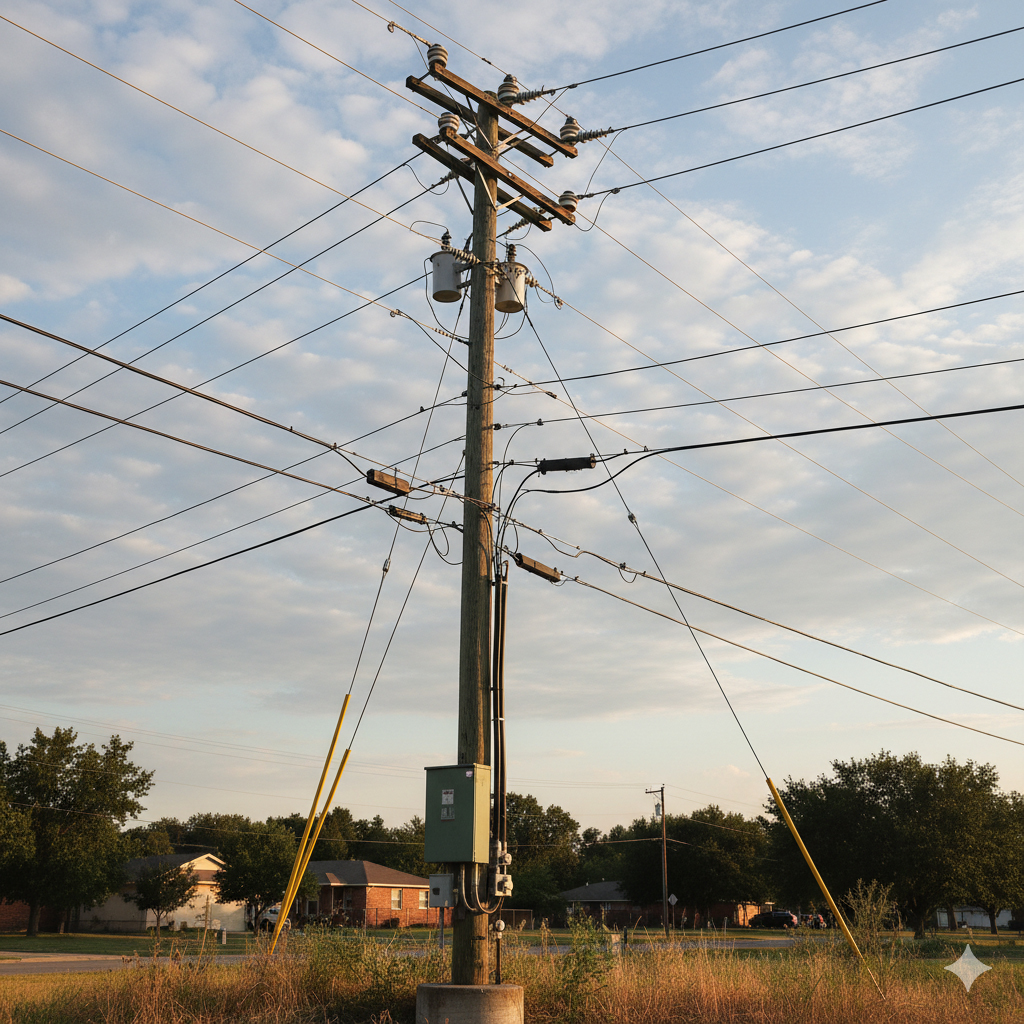
Utility infrastructure depends on correct selection, safe clearance, and durable fabrication.
Quick Navigation
- Electric Pole Basics for Buyers and Site Teams
- Materials You Can Choose for Long Life
- Electric Pole Height and Clearance Planning
- Load, Wind, and Foundation Checks Before Ordering
- Electric Pole Types by Application
- Procurement Checklist for Price and Quality
- How Vishwa Geeta Ispat Supports Project Supply
- FAQs
An electric pole looks simple from a distance, yet it carries major responsibility in every power corridor. It supports conductors, keeps safe ground clearance, and helps utilities maintain stable distribution through heat, rain, and wind. Therefore, buyers should not treat it as a basic commodity item. Instead, they should choose by application, load condition, life-cycle cost, and installation environment.
In practice, failures happen when selection is rushed. For example, an under-sized unit may survive initial commissioning but begin to lean once cable load and seasonal wind pressure increase. Similarly, poor coating or improper curing can shorten service life. That is why a structured buying approach is far more useful than price-only comparison.
Electric Pole Basics for Buyers and Site Teams
Before placing a purchase order, confirm three fundamentals: use case, expected load, and maintenance access. First, define whether the line is for street lighting, local distribution, industrial service, or long-distance transmission. Next, map total hardware weight including conductors, brackets, insulators, and future add-ons. Finally, check whether replacement or repair work can be done safely after installation.
Also, align civil and electrical teams early. When this coordination is delayed, foundation dimensions and mounting accessories often mismatch. As a result, project delays and rework costs rise quickly.
Materials You Can Choose for Long Life
Concrete
Strong weather resistance, reliable long-term stiffness, and lower corrosion risk in exposed zones.
Steel
Cleaner geometry, easier transport, and flexible fabrication for custom fittings and attachments.
Hybrid/Project Specific
Used where multi-utility mounting or phased network upgrades need special design integration.
Electric Pole in Concrete Form
A concrete option performs well where long service life and low rust risk are priorities. However, because it is heavier, site handling and lifting logistics must be planned in advance. In narrow or congested streets, transport route checks become especially important.
Steel Options for Faster Installation
Steel variants are easier to move and faster to position in many urban projects. In addition, they can be fabricated for specific bracket layouts. Still, coating quality is critical. Without good galvanization or surface treatment, durability can drop in humid and polluted environments.
Electric Pole Height and Clearance Planning
Correct height is a safety requirement, not a cosmetic choice. If clearance is low, wires may sag into risky zones during hot weather. On the other hand, excessive height can increase bending moment and foundation stress. So, the best design is the one that balances span, sag allowance, traffic movement, and local wind pattern.
Moreover, future growth must be considered. If roads are expected to widen or buildings are likely to rise, plan additional safety margin at the design stage. This prevents costly relocation later.
Load, Wind, and Foundation Checks Before Ordering
Every project should run a basic pre-order checklist:
- Conductor and accessory load summary (present + future)
- Wind zone and terrain exposure validation
- Soil condition and foundation depth confirmation
- Corrosion class and coating requirement definition
- Dispatch sequence mapped with site readiness
When these checks are documented upfront, procurement becomes more accurate, and delivery planning becomes smoother.
Electric Pole Types by Application
Different jobs need different structures. A residential lane, an industrial feeder, and a high-voltage route cannot use one standard profile. Therefore, application-based classification helps teams avoid overdesign in one area and underdesign in another.
Distribution and Street Lighting Networks
These routes usually need moderate heights, consistent spacing, and quick service access. In many cases, visual uniformity is also important for city roads.
High-Voltage Corridors and the Electric Pole
Transmission environments demand stronger sections, larger clearances, and tighter alignment control. Even a small design mismatch can affect a long stretch of line reliability.
Procurement Checklist for Price and Quality
Price variation is normal in this category. However, smart buyers compare total delivered value, not just ex-yard rate. Use the checklist below while finalizing suppliers:
| Parameter | What to Ask | Why It Matters |
|---|---|---|
| Material Grade | Certificate and test references | Controls structural reliability and service life |
| Coating/Finish | Galvanization thickness or paint spec | Improves corrosion resistance |
| Dimensional Accuracy | Tolerance declaration | Reduces fitment rework at site |
| Commercial Terms | Freight, unloading, taxes, payment cycle | Avoids hidden cost surprises |
| Dispatch Support | Lead time and sequence planning | Keeps project timeline on track |
How Vishwa Geeta Ispat Supports Reliable Supply for Electric Pole Projects
Vishwa Geeta Ispat works with a practical, execution-first approach. The team helps buyers align product choice with site conditions, lead times, and project phase planning. As a result, procurement decisions become easier and more predictable.
Whether the requirement is for utility distribution, structural support, or project-based dispatch, the emphasis remains the same: dependable quality, clear communication, and timely delivery coordination.
RSJ & Electric Poles • Steel Price Updates • Beams & Sections • Weight Charts & Calculators • Contact & Enquiry
Need Support for Your Next Utility or Infrastructure Requirement?
Get project-friendly commercial terms, coordinated dispatch, and dependable quality with Vishwa Geeta Ispat.
FAQs
How do I select between steel and concrete for new lines?
Match material to environment, loading, logistics, and maintenance access. There is no single “best” option for every route.
Why can two suppliers quote very different rates for similar sizes?
Differences usually come from grade, coating quality, fabrication detail, dispatch scope, and payment terms.
Can one design be used for all city and industrial locations?
No. Terrain, wind, clearance, and line function vary by location, so design should be application-specific.
Is bulk delivery possible with phase-wise dispatch?
Yes. Phase-wise planning is common and helps align deliveries with site execution milestones.
Conclusion
Good utility performance starts with correct selection, not last-minute compromise. When design logic, material quality, and dispatch planning move together, projects run smoother and remain safer over time. If you are evaluating your next power or infrastructure requirement, use a checklist-driven approach and choose a supplier that supports execution on the ground, not only invoicing on paper.
Editorial tip: Keep this article updated every quarter with new project photos, one field case example, and 2–3 fresh FAQs to improve both user value and search freshness.