THE OFTEN-IGNORED IMPORTANCE OF A CURRENT POLE IN DAILY ELECTRIC LIFE
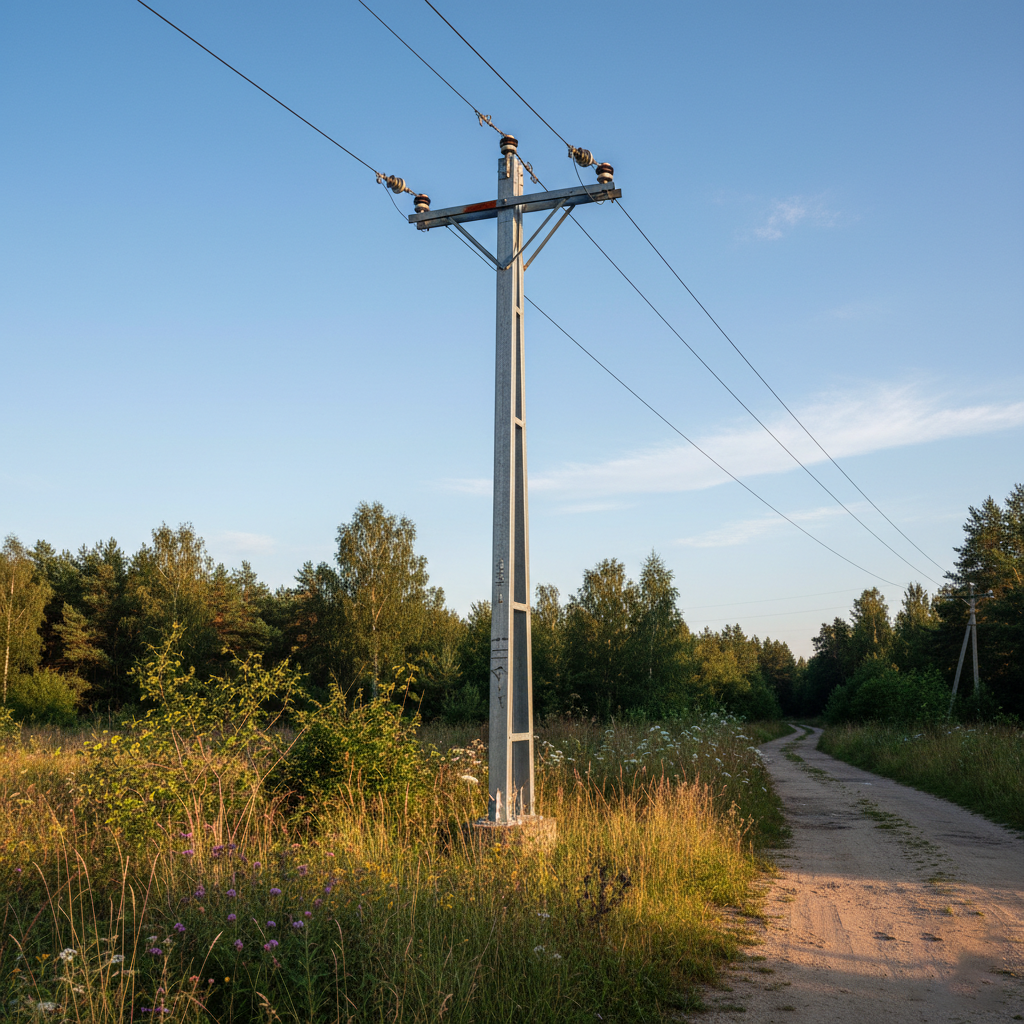
A current pole looks simple, but it carries alignment, load, clearance, and years of reliability on its shoulders.
Quick Navigation
- Why current poles matter
- What a current pole really does
- Material selection for long life
- Height: more critical than it looks
- Weather and seasonal impact
- Foundation: the hidden power
- Overloading without noticing
- Spacing is never random
- Modern poles carry more than power
- The future: smart, busy poles
- Practical checklist
- FAQs
Current pole is a term many people use for an electric pole or utility pole. It stands somewhere between being extremely noticeable and completely invisible. It is tall, sometimes slightly bending, with wires hanging in controlled tension, yet almost nobody actually thinks about how much this one structure does. Everything from home lighting to shop boards to industrial circuits begins from the support these poles provide.
Companies like Vishwageeta (Vishwa Geeta Ispat) spend months designing poles for stability and service life, while people passing under them don’t even give a half-second glance. Strange contrast, but that’s the life of a current pole.
WHAT A CURRENT POLE REALLY DOES BEHIND THE SCENES
The job appears simple from the outside, but nothing about a current pole is actually simple. It keeps high-voltage lines elevated so they don’t touch the ground. It maintains alignment from one pole to the next. It handles wind load, cable tension, temperature changes, and even vibrations caused by long-distance power movement.
If one pole leans a little too much, the wires start dragging. If it tilts the other direction, the wires stretch hard enough to snap during storms. So the structure has to stand steady for years without making any noise about the work it does.
CHOOSING THE RIGHT MATERIAL FOR MANUFACTURING A CURRENT POLE
Current poles are made from concrete, steel, wood, or composite materials, and each comes with its own advantages and challenges. Concrete poles remain rigid, but internal cracks can go unseen until repair becomes urgent. Steel poles work beautifully for cities, but need corrosion protection—because even a thin layer of rust can spread faster than expected.
Wooden poles still exist in older parts of towns, but insects and moisture reduce strength slowly. Composite poles are lighter, but installation has to be precise or long-term strength drops. Manufacturers choose the material not only for price, but also depending on soil type, wind pressure, and the load the pole must carry.
| Design Decision | What it controls | Why it matters |
|---|---|---|
| Material (steel/concrete/composite) | Strength, durability, corrosion/crack behavior | Directly impacts service life and maintenance frequency |
| Height + clearance | Sag band, safety zone, line behavior in heat | Too low = unsafe sag; too high = higher wind moment if not designed well |
| Foundation depth + soil prep | Tilt resistance, stability under wind/tension | A strong pole on weak ground still fails over time |
| Spacing between poles | Cable tension, sag, breakage risk | Wrong spacing multiplies maintenance across spans |
THE HEIGHT OF A CURRENT POLE IS ALWAYS MORE CRITICAL THAN IT LOOKS
Most people assume a taller pole means better performance, but height selection is tightly calculated. If the current pole is too tall, the wires start pulling harder than safe tension limits. If the pole is too short, the wires sag dangerously low—especially in summers when metal expands.
Even one wrongly sized pole in a straight line can disturb uniform tension and force unnecessary pressure on the next few poles, causing early maintenance or unexpected tilting.
WHAT WEATHER AND SEASON DO TO A CURRENT POLE OVER THE YEARS
The pole stands in harsh sunlight, sudden rainstorms, winter cold, and dusty winds without any protection. Sunlight expands metal parts, then night cold shrinks them again. Rainwater softens soil, making the base shift slightly. Strong winds push from the side every year. Storms add sudden violent pressure.
A current pole does not break in a day—it weakens silently. Most people realise something is wrong only when the pole leans enough to catch attention, which is late in many cases.
THE FOUNDATION IS THE MOST POWERFUL BUT MOST HIDDEN PART
The portion above the ground gets noticed, but the part that decides strength is buried inside the soil. A shallow foundation or poorly compacted soil leads to tilt. Water-filled soil makes the base loose. Rocky ground needs precise drilling, otherwise cracks form around the pole base.
This is why suppliers focus heavily on depth and soil preparation—because a strong pole on a weak base still eventually loses stability.
WHY CURRENT POLES GET OVERLOADED WITHOUT ANYONE REALISING IT
A pole designed to carry only electric cables slowly becomes support for broadband wires, communication fibre, CCTV cameras, and sometimes even banners or festival decorations. Every addition seems small to the person adding it, but collectively the weight increases and wind load grows.
A current pole can handle only a certain amount of extra load before alignment shifts or life reduces—often without obvious warning.
SPACING BETWEEN CURRENT POLES IS NEVER DECIDED RANDOMLY
Look at any power line. The distance between poles looks normal, but it’s the result of engineering measurements. Longer spacing means cables will hang too low. Very short spacing makes wires tight and more likely to break during windy nights.
One miscalculated spacing in one stretch forces adjustments in the next few spans, multiplying maintenance issues. Spacing is silent—but critical.
MODERN CURRENT POLES CARRY MORE THAN JUST POWER NOW
Today, the expectation from a current pole is higher than before. Poles often hold data cables, fibre internet, 4G/5G small antennas, smart lighting, environmental sensors, public notice speakers, and sometimes EV-related lines.
That is why modern poles must be stronger and more durable. Vishwageeta manufactures poles keeping future capacity in mind so the system doesn’t become outdated in a few years.
THE FUTURE OF CURRENT POLES LOOKS TECHNICAL AND BUSIER
Smart cities rely on smart infrastructure. Poles are now used to mount sensors for traffic monitoring, air-quality reading, security alerts, and even emergency response systems. Where older poles supported only electricity, new poles are turning into multi-utility supports.
A current pole in the future might not just be a pole—it might be a mini-information hub standing quietly beside the road.
SEO improvement tip: On-page, you can also use “electric pole” and “utility pole” in internal anchors and image alt text to capture broader search intent.
PRACTICAL CHECKLIST FOR INSTALLATION OR INSPECTION
- Confirm intended load today (power) and likely additions (telecom, CCTV, lighting).
- Verify route clearance needs: road width, traffic profile, and safe sag band.
- Check soil condition and ensure proper compaction + foundation depth.
- Confirm pole spacing and span layout—avoid ad-hoc adjustments.
- Plan corrosion protection (steel) or crack monitoring (concrete) based on environment.
- Schedule periodic alignment checks—don’t wait for visible leaning.
RSJ & Electric Poles • Industrial Steel Applications • Steel Specifications & Standards • Buying Guides & Procurement • Contact & Enquiry
Need Poles Designed for Load + Future Upgrades?
Connect with Vishwa Geeta Ispat (Vishwageeta) for dependable supply and practical guidance on pole selection for utility, city, and industrial projects—built for stability, alignment, and future attachments.
Frequently Asked Questions
What is the main job of a current pole?
To keep overhead lines safely elevated, maintain alignment across spans, and withstand wind, tension, temperature change, and long-term vibration.
Why do poles become unsafe without visible damage?
Internal cracks (concrete), corrosion (steel), soil settlement, and slow foundation loosening can reduce stability long before obvious failure appears.
Can adding extra cables reduce pole life?
Yes. Extra lines and accessories increase weight and wind load. Without capacity checks, alignment shifts and fatigue can reduce pole life.
What matters more: the pole or the foundation?
Both matter, but the foundation often decides stability. A strong pole on a weak base will still lean or fail over time.
Conclusion
A current pole may look like background infrastructure, but it silently carries power, safety, and increasingly data and public systems. When height, spacing, material, and foundation are engineered correctly, poles stay stable for years with lower maintenance pressure. The more modern our cities become, the more important it is to treat poles as load-bearing, future-ready infrastructure—not an afterthought.