THE EVERYDAY STEEL SHAPE THAT DOES MORE WORK THAN MOST PEOPLE NOTICE
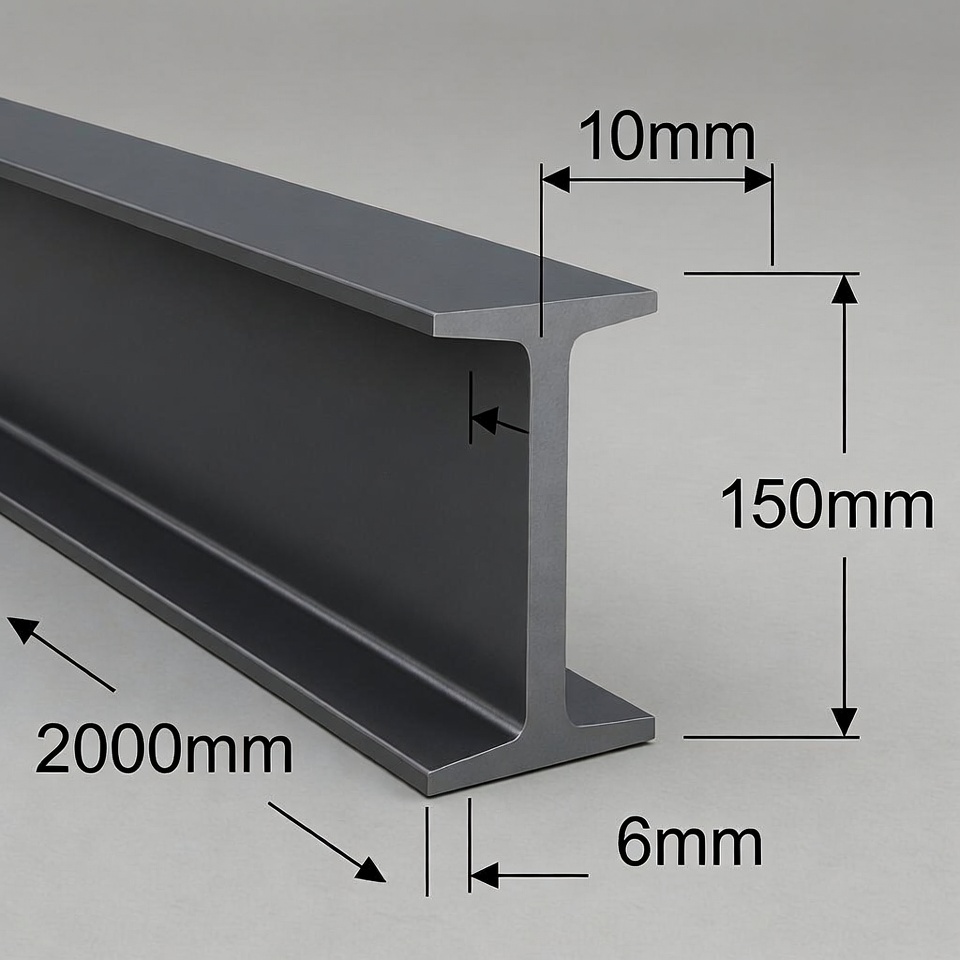
H beams quietly carry heavy loads in buildings, bridges, warehouses, towers, and industrial structures.
Quick Navigation
- What an H beam is
- Why the H shape works
- Material quality and future safety
- Height, width, thickness: not random
- Multi-direction pressure handling
- Role in columns and foundations
- Long-span industrial performance
- Temperature and weather impact
- Future of H beams
- Why modern structures rely on H beams
- Selection checklist
- FAQs
The H beam is one of those structural steel sections that doesn’t get much attention outside construction or fabrication. It sits inside buildings, bridges, warehouses, towers, and heavy structures—quietly holding massive loads without drama. Most people never realise that a simple H-shaped steel section can carry tons of weight every day.
Companies like Vishwageeta (Vishwa Geeta Ispat) supply H beams with careful detailing, because even a small mistake in section size, thickness, or weight ratio can change how an entire project performs over years.
WHY THE H BEAM WAS DESIGNED WITH SUCH A SIMPLE SHAPE
At first glance, the shape looks almost too simple: two wide flanges and a central web. But that simplicity is exactly why the H beam works. The flat flanges handle compression like steady walls, while the centre web controls tension and shear so the section resists bending and twisting.
Engineers choose this shape because it distributes load efficiently across the beam length, helping the structure stay stable under heavy floors, long spans, and changing conditions. The H design is practical, efficient, and engineered for predictable performance.
HOW THE MATERIAL QUALITY OF AN H BEAM DECIDES THE FUTURE OF A BUILDING
An H beam is not just steel pressed into shape. Steel grade, alloy composition, dimensional accuracy, rolling temperature, and heat treatment influence final strength and ductility. Poor-quality steel can show bending, deformation, or internal cracking under repeated stress.
In structural work, one weak beam hidden inside a building can create uneven load distribution. The outside may look fine, but internal stress increases year after year. That’s why most engineers treat steel quality as non-negotiable.
THE HEIGHT, WIDTH AND THICKNESS MEASUREMENTS ARE NOT RANDOM NUMBERS
Many people assume H beams come in “standard sizes” and selection is easy. In reality, every millimetre in flange width or web thickness affects strength, stability, and span performance:
- Thicker web: improves resistance against bending and shear.
- Wider flange: increases stability and reduces twist in horizontal placement.
- Greater depth (height): typically improves long-span capacity under load.
- Better tolerances: improves fit-up, welding quality, and alignment on site.
| Parameter | What changes | Site impact |
|---|---|---|
| Flange width | Stability and buckling resistance | Better for beams and columns under heavy loads |
| Web thickness | Shear + bending resistance | Improves performance in long-span and vibration zones |
| Section depth | Span capacity | Supports larger distances with fewer columns |
| Steel grade | Yield/ductility behavior | Directly affects long-term safety and fatigue resistance |
H BEAMS HANDLE PRESSURE FROM MULTIPLE DIRECTIONS AT ONCE
The interesting thing about an H beam is that it doesn’t only handle vertical loads. It can manage lateral pressure from wind, vibration from machinery, ground shifts, roof weight, and uneven construction loads during building phases.
Many shapes lose strength when forces come from unexpected directions. H beams remain stable because flanges act like strong arms holding the section firm, and the web keeps the beam from deforming too quickly under shear and bending.
THE ROLE OF AN H BEAM IN MODERN FOUNDATIONS AND COLUMNS
Foundations are not only concrete blocks. Steel sections sit inside many foundations to improve stiffness and alignment. When an H beam is placed vertically, it becomes a powerful column that resists compression and bending. When placed horizontally, it acts like a backbone carrying slabs and roofs.
This dual-role performance is a key reason contractors prefer H-shaped steel over sections that mainly perform well in only one stress direction.
HOW AN H BEAM PERFORMS DIFFERENTLY IN LONG-SPAN INDUSTRIAL BUILDINGS
Warehouses, factories, metro stations, and logistics sheds need wide spans without too many columns. This is where H beams show their real capacity: they carry heavy loads across long distances and allow open layouts without disturbing movement and design.
Wide flanges improve stability, and the overall geometry reduces vibration—useful when machines operate or heavy vehicles move inside a facility.
TEMPERATURE AND WEATHER IMPACT AN H BEAM MORE THAN PEOPLE THINK
Steel expands in heat and contracts in cold. Over a 20-meter beam, expansion can become noticeable enough to influence alignment. That’s why steel quality, surface finishing, and protective coating matter—especially in moisture-heavy, polluted, or coastal environments.
Planning coating and corrosion prevention during installation typically saves significant maintenance later.
THE FUTURE OF H BEAMS LOOKS MORE REFINED, NOT JUST STRONGER
Modern structures demand more: taller buildings, wider halls, and infrastructure that must support service ducts, solar mounts, and energy-efficient fittings. H beams are evolving with better alloys, tighter rolling tolerances, and improved welding compatibility.
In many projects, lighter optimized sections are also preferred where transportation limits make traditional heavier beams difficult to handle.
MANY STRUCTURES WOULD STRUGGLE TO EXIST WITHOUT AN H BEAM
From bridges to multi-storey towers, industrial plants to mall roofs, railway sheds to highways—H beams work silently behind the scenes. Without them, much of modern infrastructure would struggle to stand safely.
A SIMPLE SHAPE, A HUGE RESPONSIBILITY
The strength of the H beam lies in how quietly it performs. No show, no decoration—just support. It carries floors, stabilises columns, supports roofs, and helps architects build bigger spans and stronger structures.
SEO tip: This page intentionally uses “H beam”, “H section”, and “wide flange beam” to match how buyers and engineers search for the same product.
QUICK CHECKLIST BEFORE YOU BUY / SELECT H BEAM STEEL
- Confirm application: column, beam, gantry, platform, bridge, shed, warehouse, etc.
- Check required span and loading (dead load + live load + equipment vibration).
- Select suitable steel grade and verify mill test / QC where applicable.
- Match flange width and web thickness to stability needs.
- Plan corrosion protection if exposed to moisture/pollution/coastal conditions.
- Ensure welding compatibility and fit-up tolerance for fabrication.
Structural Steel • Industrial Steel Applications • Steel Specifications & Standards • Contact & Enquiry
Need the Right H Beam for Your Project?
Connect with Vishwa Geeta Ispat (Vishwageeta) for dependable supply and practical guidance on selecting H beams for warehouses, buildings, industrial sheds, bridges, and fabrication works.
Frequently Asked Questions
What is the difference between an H beam and an I beam?
Generally, H beams have wider flanges and a thicker web, which can improve stability and load behavior in many structural applications.
Where are H beams used the most?
Common uses include warehouses, industrial sheds, columns, bridges, platforms, metro/rail structures, and heavy-duty fabrication.
Does coating matter for H beams?
Yes. In humid, polluted, or coastal environments, protective coating helps reduce corrosion and increases service life.
How do I choose the correct H beam size?
Beam size depends on span length, load requirements, stability needs, steel grade, and fabrication constraints. Final selection should be verified by a structural engineer.
Conclusion
The H beam looks simple, but it carries a huge responsibility. Its strength comes from smart geometry, quality steel, and correct sizing. When selected properly, it supports long spans, reduces vibration issues, stabilises structures, and enables modern infrastructure to exist safely for decades.