MS Pipe Weight Chart —
KG Per Meter
Complete Guide
A practical reference guide for calculating the weight of MS pipe using OD, thickness, and standard steel density. Built for contractors, fabricators, traders, and procurement teams who need quick pipe weight estimation before ordering, billing, loading, or fabrication.
Need current MS pipe, GI pipe, square pipe, or structural steel rates? Contact Vishwageeta Ispat directly.
Send EnquiryFill the contact form Join WhatsApp ChannelDaily rate updatesThe MS pipe weight chart is one of the most useful tools in steel buying because it connects technical specification with real project cost. Pipe weight affects rate comparison, project costing, fabrication planning, transport loading, stock verification, and final billing. This detailed guide explains the standard MS pipe weight formula, gives a ready reference chart in kg per meter, explains NB, OD, thickness and length, and shows how contractors, fabricators, traders, and industrial buyers can use pipe weight practically before placing an order.
- Why MS Pipe Weight Matters — Costing, loading, fabrication
- MS Pipe Weight Formula — OD, thickness, density constant
- MS Pipe Weight Chart in KG per Meter — Ready reference table
- How to Calculate MS Pipe Weight — Simple example
- Where MS Pipe Weight Is Used
- MS Pipe Standards, NB vs OD & Thickness
- Buyer Guidance Before Ordering MS Pipe
- How to Compare MS Pipe Rates Correctly — Per piece, per kg, per MT
- Common Mistakes While Comparing MS Pipe Rates
- FAQ — MS Pipe Weight Chart
Why MS Pipe Weight Matters
Steel Buying • Fabrication • Transport Planning • Project Estimation
MS pipe is usually purchased by length, piece, bundle, or metric tonne depending on the market practice and supplier quotation. But behind every enquiry, the real calculation comes back to one point: weight per meter. Once the weight is clear, buyers can estimate total tonnage, compare rates correctly, and understand whether the material supplied matches the expected specification.
What to mention in an MS pipe enquiry
A clear enquiry should include pipe type, size, thickness, length, quantity, delivery location, and application. For example: “MS round pipe 50 NB, 3.6 mm thickness, 6 meter length, 100 pieces, delivery to Raipur, required for shed fabrication.” This allows the supplier to calculate approximate tonnage, check actual stock, confirm loading possibility, and share a practical working rate without unnecessary back-and-forth.
When the requirement is for repeat production or structural use, also mention whether you need test certificate, specific grade, standard make, galvanised finish, black pipe, or mill-direct billing. These details change quotation accuracy and dispatch planning.
Why weight verification matters after supply
Once the material is received, the buyer can verify supply by checking total pieces, pipe size, wall thickness, and approximate bundle weight against the invoice. Small differences in thickness may not look major on a single pipe, but across 500 or 1,000 pieces the total weight difference can become meaningful.
This is why professional buyers use the weight chart before ordering and again during stock verification. It creates clarity between the purchase order, dispatch quantity, invoice, and physical material received at site.
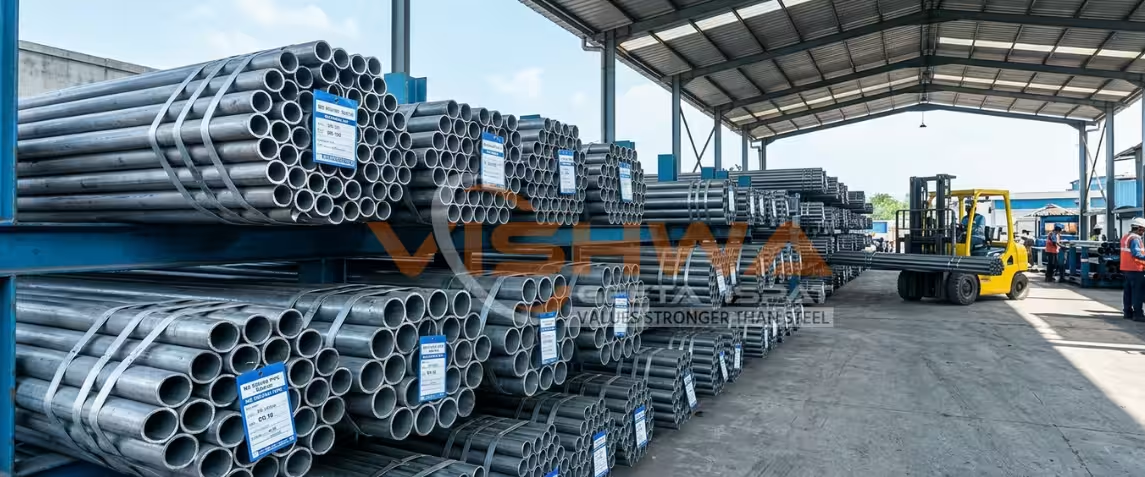
Fig 1 — MS pipe weight depends mainly on outer diameter and wall thickness. Attach relevant image here.
For Buyers and Contractors
Pipe weight helps buyers understand the actual quantity being purchased. A small difference in thickness can create a meaningful difference in total weight when the requirement is large. That directly affects quotation value, truck planning, and final project cost.
For contractors, the chart is useful during tender estimation, BOQ preparation, gate fabrication, shed work, railing, structural support, and general construction usage.
For Fabricators and Traders
Fabricators use MS pipe weight to estimate cutting loss, welding requirement, finished frame weight, and labour planning. Traders use it to cross-check stock, prepare rate offers, and calculate loading quantities for dispatch.
In simple terms, pipe weight is not just a technical value. It is a practical buying number that connects specification, cost, logistics, and trust.
MS pipe chart values are calculated reference values. Actual weight can vary slightly due to manufacturing tolerance, wall thickness variation, end finishing, galvanising, and batch-specific production standards. Always confirm final specification and current availability before placing bulk orders.
Why weight becomes more important in bulk orders
For a small repair job, a small variation in pipe weight may not affect the final cost much. But in a commercial shed, industrial railing project, fabrication contract, warehouse structure, or repeat trading order, the same variation multiplies across hundreds or thousands of meters. A difference of even 0.20 kg per meter becomes 200 kg on a 1,000 meter requirement. At bulk steel rates, that difference can change the final billing amount, truck load planning, and project margin.
This is why professional buyers do not compare MS pipe only by visual size or quoted piece rate. They compare size, thickness, length, weight per meter, total tonnage, and landed cost. A low per-piece rate may look attractive, but if the pipe is lighter due to lower thickness, the buyer may not be getting the same material strength or steel quantity.
MS Pipe Weight Formula
Outer Diameter • Wall Thickness • Steel Density Constant
The most commonly used industry formula for calculating round MS pipe weight per meter is based on the pipe's outside diameter and wall thickness. Both values are taken in millimetres.
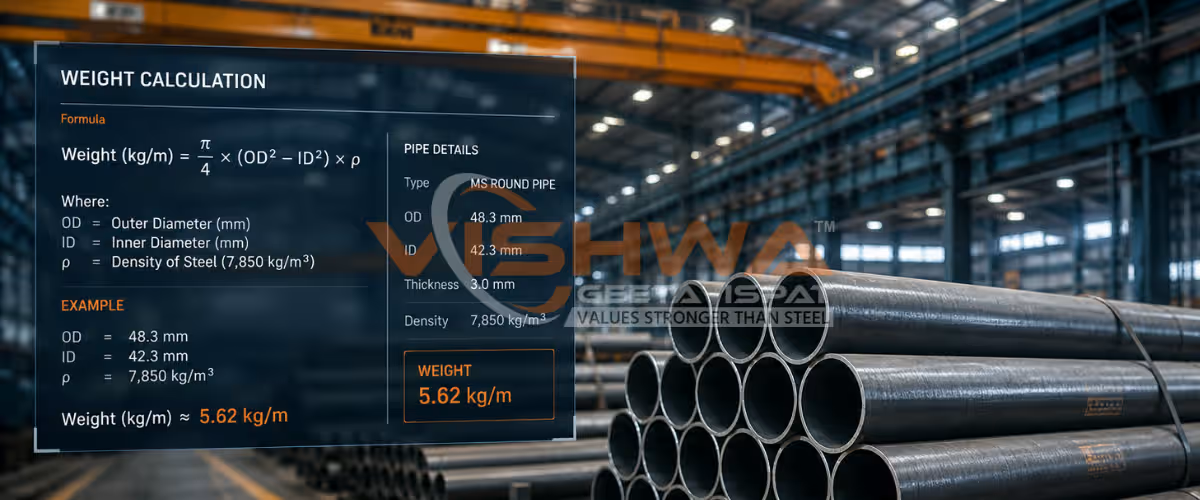
Fig 2 — Visual space for explaining OD, wall thickness, and MS pipe weight formula. Attach 1200×500px image here.
Why OD and Thickness Both Matter
A larger OD increases the pipe circumference, while higher thickness increases the volume of steel in the pipe wall. That is why two pipes with the same outer diameter can have very different weights if their wall thickness is different.
Why Chart Values Are Approximate
The formula gives a reliable calculation for estimation. In real supply, final values may move slightly due to tolerance. For project-critical work, always match the required standard, grade, thickness, and test certificate requirement before confirming supply.
The formula works best when OD and thickness are known clearly. If a buyer only shares “1 inch pipe” or “2 inch pipe”, the supplier still needs thickness and length to calculate the correct weight. For faster quotation, mention NB size, OD if available, wall thickness, required length, total pieces or tonnage, and delivery location.
MS Pipe Weight Chart in KG per Meter
Round MS Pipe • Common Sizes • Approximate Weight
The chart below gives approximate MS round pipe weight in kg per meter for common nominal bore sizes and thicknesses. Use this as a quick reference for estimation, enquiry preparation, and rate comparison.
In the market, the same nominal pipe size can be available in different wall thicknesses. That is why a 50 NB pipe should never be compared only by name. A 50 NB pipe with 3.2 mm thickness and a 50 NB pipe with 3.6 mm thickness are not the same from a weight, cost, or application point of view. The outer diameter may remain similar, but the wall thickness changes the steel content inside each running meter.
For bulk purchase, always convert the requirement into kg or MT before comparing suppliers. A quotation that appears cheaper per piece may become costlier after calculating actual kg per meter, transport loading, and usable length. This is especially important for contractors, fabrication units, industrial buyers, gate manufacturers, shed fabricators, and traders working with repeat orders.
| Pipe Size | Outer Diameter | Thickness | Weight | Common Use |
|---|---|---|---|---|
| 15 NB | 21.3 mm | 2 mm | 0.95 kg/m | Light railing, low-load fabrication |
| 15 NB | 21.3 mm | 2.6 mm | 1.20 kg/m | Utility line, light frame work |
| 20 NB | 26.9 mm | 2.3 mm | 1.40 kg/m | Frames, furniture, utility structures |
| 20 NB | 26.9 mm | 2.6 mm | 1.56 kg/m | General fabrication and supports |
| 25 NB | 33.7 mm | 2.6 mm | 1.99 kg/m | Gate work, railings, small structures |
| 25 NB | 33.7 mm | 3.2 mm | 2.41 kg/m | Medium fabrication and support frames |
| 32 NB | 42.4 mm | 2.6 mm | 2.55 kg/m | Light shed and fabrication work |
| 32 NB | 42.4 mm | 3.2 mm | 3.09 kg/m | Medium fabrication, railing, frames |
| 40 NB | 48.3 mm | 3.2 mm | 3.56 kg/m | Structural supports, industrial fabrication |
| 40 NB | 48.3 mm | 4 mm | 4.37 kg/m | Heavier support and shed work |
| 50 NB | 60.3 mm | 3.2 mm | 4.51 kg/m | Shed work and pipe frames |
| 50 NB | 60.3 mm | 3.6 mm | 5.03 kg/m | Fabrication, support columns, medium structure |
| 65 NB | 76.1 mm | 3.6 mm | 6.44 kg/m | Medium structural work, pipe frames |
| 65 NB | 76.1 mm | 4.5 mm | 7.95 kg/m | Heavier fabrication and industrial support |
| 80 NB | 88.9 mm | 4 mm | 8.37 kg/m | Heavy fabrication, industrial work |
| 80 NB | 88.9 mm | 4.8 mm | 9.95 kg/m | Plant support and heavy-duty frame work |
| 100 NB | 114.3 mm | 4 mm | 10.88 kg/m | Industrial structures, utility supports |
| 100 NB | 114.3 mm | 4.5 mm | 12.18 kg/m | Heavy supports and fabrication |
| 125 NB | 139.7 mm | 4.8 mm | 15.97 kg/m | Heavy-duty support and industrial use |
| 150 NB | 168.3 mm | 4.8 mm | 19.35 kg/m | Heavy structure, plant and fabrication use |
| 150 NB | 168.3 mm | 5.4 mm | 21.69 kg/m | Industrial-heavy application and plant structures |
For practical buying, this chart should be treated as a planning tool rather than a final invoice document. The final dispatched material may vary within accepted manufacturing tolerance. If your order is for engineering-sensitive work, always ask for the applicable standard, grade, test certificate requirement, and actual thickness confirmation before finalising.
Pipe Size refers to the nominal bore commonly used in trade communication. Outer Diameter is the actual outside measurement of the round pipe. Thickness is the pipe wall thickness. Weight is approximate kg per meter calculated from OD and thickness. For a 6 meter pipe, multiply kg/m by 6. For total tonnage, multiply by total number of pieces and divide by 1,000.
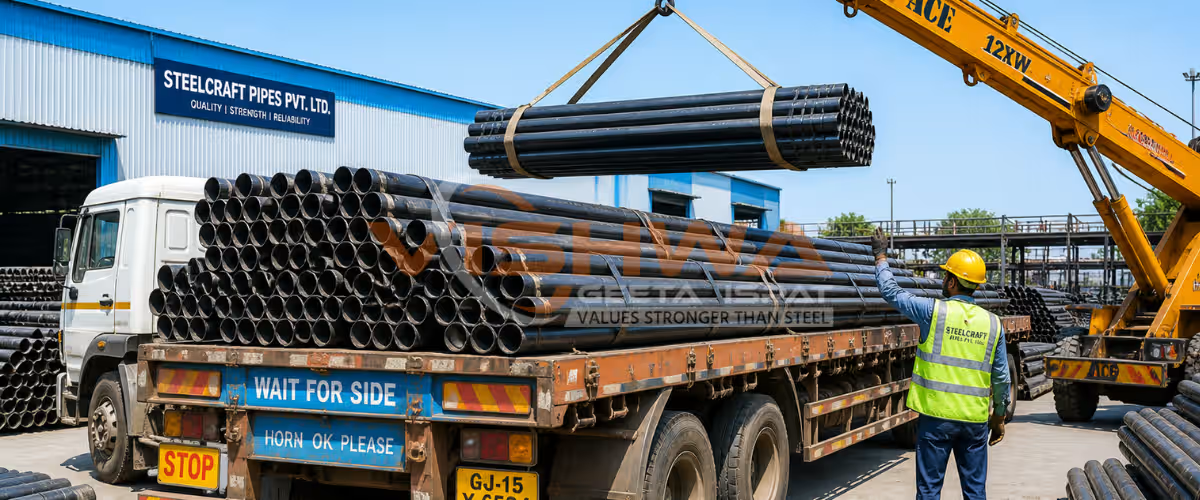
Fig 3 — MS pipe weight chart in kg per meter. Attach branded chart image here.
How to Calculate MS Pipe Weight — Simple Example
Step-by-Step Calculation • 50 NB Pipe Example
Let us calculate the approximate weight of a 50 NB MS pipe with 60.3 mm outer diameter and 3.6 mm wall thickness.
Weight = 56.7 × 3.6 × 0.02466
Weight ≈ 5.03 kg/m
| Requirement | Calculation | Approx. Result |
|---|---|---|
| 1 meter of 50 NB pipe | Formula result | 5.03 kg |
| 1 piece of 6 meter length | 5.03 × 6 | 30.18 kg |
| 100 pieces | 30.18 × 100 | 3,018 kg |
| Metric tonne conversion | 3,018 ÷ 1,000 | 3.018 MT |
This conversion is useful when a buyer receives rate per kg or per metric tonne but the site requirement is in pieces. It also helps fabricators estimate finished project weight before dispatch or installation.
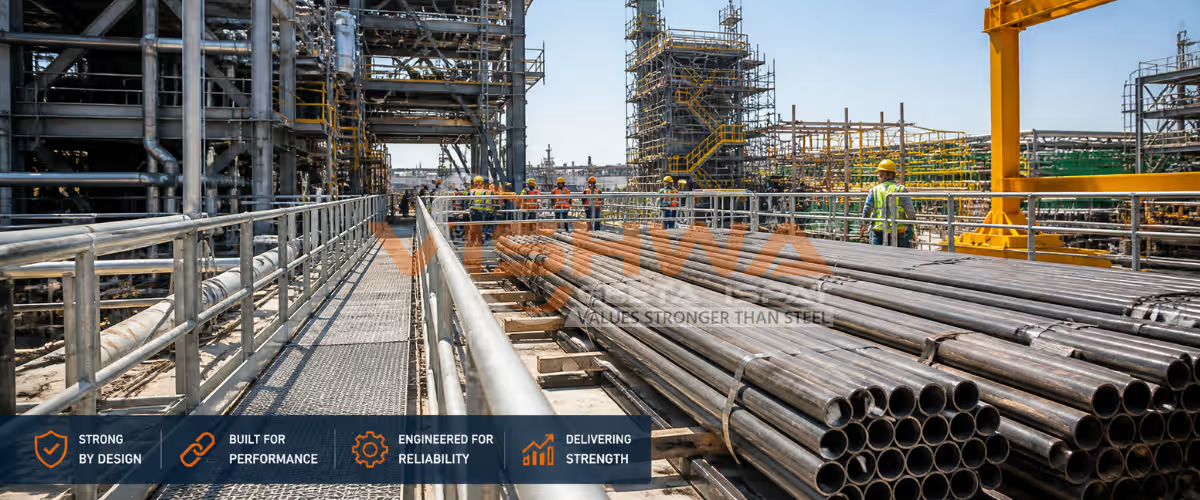
Fig 4 — Visual space for MS pipe weight calculation example. Attach 1200×500px image here.
Where MS Pipe Weight Is Used
Procurement • Fabrication • Billing • Loading • Project Planning
MS pipe weight is used at almost every stage of a steel project. From the first enquiry to final dispatch, kg per meter helps convert drawing requirements into real purchase quantity.
Construction & Structure
Used for support frames, sheds, railings, gates, trusses, and general structural applications where load and quantity need to be planned correctly.
Fabrication
Fabricators use pipe weight for cutting plans, finished product weight, welding estimation, wastage calculation, and quotation preparation.
Transport & Loading
Truck loading depends on total weight. Pipe weight helps plan bundles, vehicle capacity, freight cost, and safe dispatch quantity.
Billing & Stock Check
Traders and buyers use chart weight to cross-check invoice quantity, stock count, and total tonnage received against order specifications.
When asking for MS pipe rates, share size, OD or NB, thickness, length, quantity, delivery location, and whether you need black pipe, galvanised pipe, or specific standard material. Clear enquiries get faster and more accurate rates.
MS Pipe Standards, NB vs OD & Thickness
Nominal Bore • Outer Diameter • Wall Thickness • Standard Length
One common confusion in MS pipe buying is the difference between NB size and actual outer diameter. NB means nominal bore. It is a trade size used for communication, not always the exact inside or outside measurement. OD means outer diameter, which is the actual external measurement of the pipe. The weight formula uses OD and wall thickness, not only the NB name.
NB is the trade identity
When someone asks for 25 NB, 40 NB, or 50 NB pipe, they are using the common market identity of the pipe size. This helps suppliers quickly understand the category. However, for accurate weight calculation, the actual OD and thickness are needed.
For example, 50 NB pipe commonly has around 60.3 mm OD. If the thickness is 3.6 mm, the weight comes close to 5.03 kg per meter. If the thickness changes, the weight changes even though the NB size remains the same.
Thickness decides steel quantity
Thickness is the biggest practical difference between a light pipe and a heavier pipe of the same size. A buyer comparing only size may think two quotations are the same, but if one quotation is for lower thickness, the actual steel quantity and strength may be different.
For commercial buying, always compare quotation against the same size, same thickness, same length, same coating requirement, same delivery location, and same billing unit.
| Term | Meaning | Why It Matters |
|---|---|---|
| NB | Nominal bore or common trade size | Used for enquiry and market communication |
| OD | Outer diameter in mm | Used directly in weight calculation |
| Thickness | Wall thickness in mm | Controls pipe weight, cost, and application suitability |
| Length | Usually supplied in standard lengths, commonly around 6 meter | Required for piece-weight and truck-load calculation |
| Black / GI | Plain MS pipe or galvanised pipe with zinc coating | Coating can affect usage, surface protection, and final supply requirement |
For general fabrication work, buyers often focus on price first. But in steel, specification clarity saves money. A clear enquiry reduces back-and-forth, avoids wrong comparison, and helps the supplier give a faster working rate.
Before Ordering MS Pipe — What Buyers Should Check
Specification • Thickness • Length • Quality • Dispatch
Confirm Thickness
Thickness has a direct effect on weight and price. Always confirm actual wall thickness before comparing quotations.
Check Length
Most MS pipes are traded in standard lengths, but always confirm length because total piece weight depends on it.
Compare Per MT Cost
Rate per piece can confuse buyers if weight differs. Compare on a per kg or per MT basis for better clarity.
Ask for Availability
Some sizes and thicknesses may move faster in the market. Confirm stock before committing delivery timelines.
Match Application
Light fabrication, railing, shed, and industrial support work may need different thickness and quality levels.
Work With Trusted Supplier
A reliable steel supplier helps you avoid wrong thickness, delayed dispatch, and unclear rate comparison.
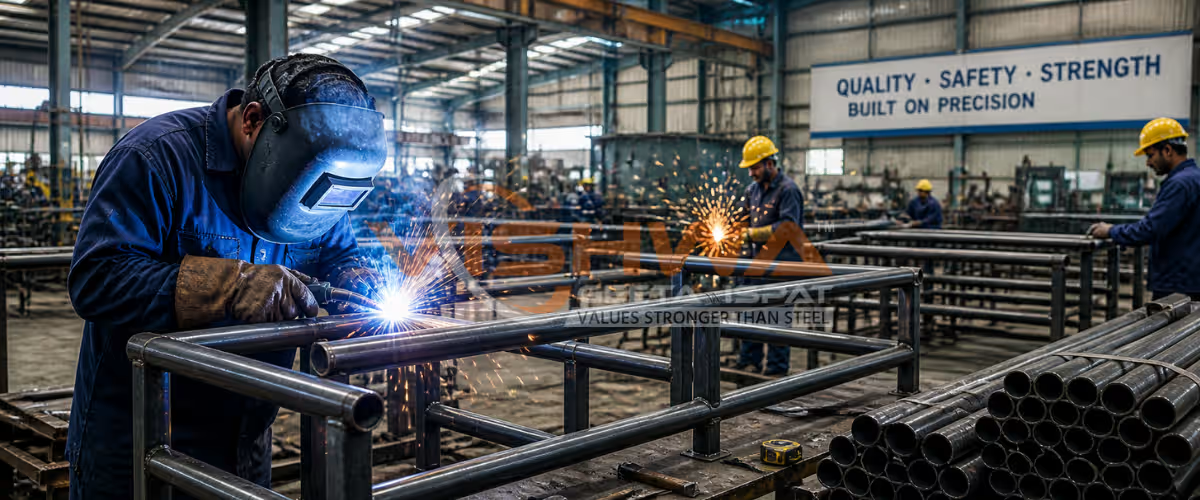
Fig 5 — MS pipe buying is not only about rate. Thickness, stock availability, dispatch planning, and supplier reliability matter equally.
How to Compare MS Pipe Rates Correctly
Per Piece • Per Meter • Per KG • Per MT • Landed Cost
MS pipe rates are sometimes discussed per piece, sometimes per kg, and sometimes per metric tonne. This creates confusion when two quotations use different billing logic. The cleanest way to compare MS pipe offers is to bring both quotations to the same base: actual kg or metric tonne cost for the same specification.
Let’s break it down. If Supplier A quotes a lower price per piece but the pipe has lower thickness, the material may contain less steel. Supplier B may quote a higher price per piece but offer heavier material, better availability, faster dispatch, or a delivered rate. Without converting both offers into kg or MT and checking landed cost, the comparison is incomplete.
| Comparison Point | What to Check | Why It Matters |
|---|---|---|
| Pipe size | NB and OD should match | Different size means different weight and application strength |
| Wall thickness | Confirm thickness in mm | Thickness directly changes kg/m and total steel quantity |
| Length | Confirm standard length, commonly 6 meter | Piece price cannot be compared without length clarity |
| Billing unit | Per piece, per kg, or per MT | Convert everything to one common unit before deciding |
| Freight | Ex-yard or delivered rate | Final landed cost may change after transport and unloading |
| Availability | Ready stock or mill wait time | Delayed dispatch can affect project timeline and labour planning |
Do not finalise MS pipe only on the lowest visible rate. Finalise after checking thickness, actual weight, delivery term, stock availability, and supplier reliability. In steel procurement, the correct material at the right time often saves more money than a slightly lower rate on unclear specification.
Common Mistakes While Comparing MS Pipe Rates
Rate Comparison • Thickness Difference • Hidden Cost • Delivery Planning
The cheapest quotation is not always the most economical quotation. In MS pipe buying, one quotation may look lower because the pipe has lower thickness, shorter length, different surface finish, different brand, or a different billing method. Before finalising, compare the material on a like-for-like basis.
Comparing piece rate only
Piece rate can mislead if two suppliers quote different thickness or length. Convert both offers into kg or metric tonne cost.
Ignoring wall thickness
Thickness changes both weight and application strength. Always ask for confirmed thickness in mm.
Not checking delivery terms
Ex-yard rate and delivered rate are different. Freight, unloading, and location affect final landed cost.
Skipping availability check
A quoted rate is useful only if the required size and thickness are actually available for dispatch.
Using old charts blindly
Use charts for estimation, but confirm actual specification, tolerance, and current supply condition.
Not sharing full enquiry
Incomplete enquiries delay rate response. Share size, thickness, quantity, length, location, and application.
Send your enquiry like this: “Required MS round pipe, 50 NB, 3.6 mm thickness, 6 meter length, 100 pieces, delivery to Raipur / site location, required for fabrication.” This gives the supplier enough information to calculate tonnage, check stock, estimate freight, and share a realistic working rate.
Pipe weight values in this guide are calculated using standard industry formula and are intended for estimation. For final procurement, always confirm material standard, OD, wall thickness, length, grade, tolerance, and current stock with your steel supplier.
MS Pipe Weight Chart — Most Asked Questions
FAQ • For Contractors, Fabricators & Steel Buyers
Vishwageeta Ispat — MS Pipe Supplier in Raipur
Vishwageeta Ispat supplies MS Pipes, GI Pipes, square pipes, rectangular pipes, TMT bars, MS angles, ISMB beams, ISMC channels, plates, sheets, and other structural steel products for contractors, fabricators, traders, industries, and project buyers. For buyers who need the right size, right thickness, current working rate, and reliable dispatch, our team provides practical support from enquiry to loading and delivery planning.
Need today's MS pipe rates? Share your size, thickness, quantity, and delivery location. Our team will help you with current working rates and availability.