MS Square Pipe
Weight Chart
in KG Per Meter
A practical, thickness-wise MS square pipe weight chart for contractors, fabricators, engineers, traders, and project buyers. Use this guide to calculate square hollow section weight, compare pipe sizes, estimate bundle quantity, and plan steel procurement with better accuracy.
For current square pipe availability, thickness, brand, and working rates, contact Vishwageeta Ispat.
Send EnquiryGet current price Join WhatsApp ChannelDaily rate updatesMS square pipe weight chart helps buyers estimate the weight of square hollow sections before ordering material. In steel procurement, weight is not just a technical number. It directly affects billing, transportation cost, loading planning, fabrication estimate, and project budgeting. This guide gives you a ready reference table for common MS square pipe sizes, explains the formula behind the chart, and shows how to calculate total weight for project quantities.
- What is MS Square Pipe? — SHS meaning, uses, and basic structure
- MS Square Pipe Weight Formula — KG per meter calculation
- MS Square Pipe Weight Chart — Common sizes and thickness
- Example Calculation — 40x40 and 50x50 calculation
- Applications of MS Square Pipe
- Buying Guide — Thickness, tolerance, quality checks
- FAQ — Most searched questions
What is MS Square Pipe?
Mild Steel • Square Hollow Section • Fabrication Material
MS square pipe is a hollow steel section with equal outside width and height. In engineering language, it is commonly called SHS, which means Square Hollow Section. In the Indian steel market, buyers also call it square pipe, square tube, MS box pipe, hollow square pipe, or square section pipe.
Because of its closed box-type profile, MS square pipe gives good strength, clean appearance, and easy fabrication. It is widely used in gates, railings, sheds, industrial frames, rooftop structures, machine stands, furniture frames, sign boards, support structures, and light-to-medium fabrication jobs.
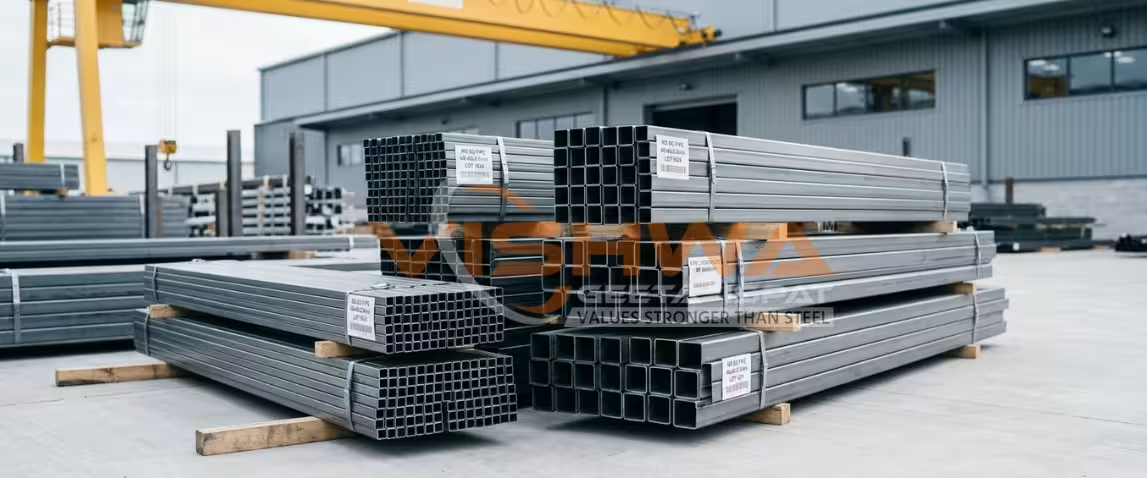
Fig 1 — MS square pipe is also known as square hollow section, commonly used in fabrication, construction, gates, railings, and industrial frames.
How MS Square Pipe is Written
MS square pipe size is usually written as outside size × outside size × thickness. For example, 50×50×2.5 mm means the pipe has 50 mm outside width, 50 mm outside height, and 2.5 mm wall thickness.
The first two values are equal because the section is square. When the width and height are different, the product becomes a rectangular hollow section, commonly called RHS or rectangular pipe.
Why Weight Chart Matters
Steel is commonly billed by weight. So even if you buy square pipe by piece or length, the final costing is closely linked with kg per meter and total metric tonne requirement.
A reliable square pipe weight chart helps you compare thickness, estimate loading weight, calculate transport requirement, check quotation accuracy, and avoid underestimating project cost.
MS Square Pipe Weight Formula
Theoretical Weight • Steel Density • KG Per Meter
The standard theoretical calculation is based on the cross-sectional steel area multiplied by steel density. For mild steel, the density is generally taken as 7850 kg/m³. When dimensions are in millimetres, the formula below gives approximate weight in kg per meter.
Short Approximation:
Weight (kg/m) = 0.0314 × T × (B − T)
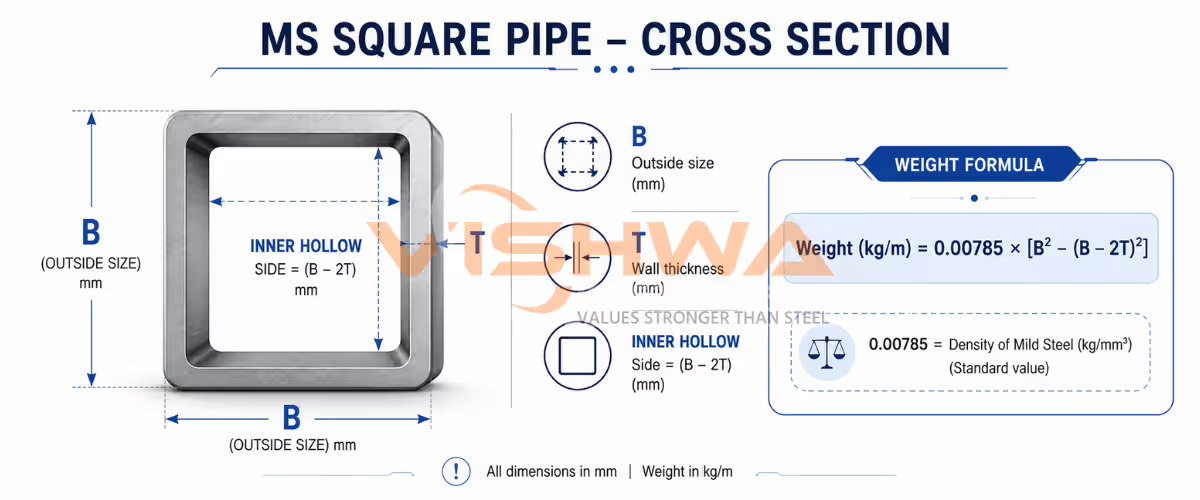
Fig 2 — Square pipe weight is calculated from the steel area in the hollow section, not from the full outside square.
The chart below gives theoretical values. In real market supply, actual weight may be slightly different because of manufacturing tolerance, corner radius, surface condition, and mill practice. For exact billing, always depend on actual weighbridge weight or supplier-confirmed weight.
MS Square Pipe Weight Chart in KG Per Meter
Common SHS Sizes • Thickness Wise Approximate Weight
Use this MS square pipe weight chart as a quick reference for project estimation. Values are approximate theoretical weights in kg per meter. To calculate one standard 6-meter piece weight, multiply kg/m by 6.
| MS Square Pipe Size | 1.2 mm | 1.6 mm | 2.0 mm | 2.5 mm | 3.0 mm | 4.0 mm | 5.0 mm | 6.0 mm |
|---|---|---|---|---|---|---|---|---|
| 20×20 mm | 0.71 | 0.93 | 1.13 | 1.37 | 1.60 | 2.01 | 2.36 | 2.64 |
| 25×25 mm | 0.90 | 1.18 | 1.44 | 1.77 | 2.07 | 2.64 | 3.14 | 3.58 |
| 30×30 mm | 1.09 | 1.43 | 1.76 | 2.16 | 2.54 | 3.27 | 3.93 | 4.52 |
| 32×32 mm | 1.16 | 1.53 | 1.88 | 2.32 | 2.73 | 3.52 | 4.24 | 4.90 |
| 38×38 mm | 1.39 | 1.83 | 2.26 | 2.79 | 3.30 | 4.27 | 5.18 | 6.03 |
| 40×40 mm | 1.47 | 1.93 | 2.39 | 2.94 | 3.49 | 4.52 | 5.50 | 6.41 |
| 50×50 mm | 1.84 | 2.44 | 3.01 | 3.73 | 4.43 | 5.78 | 7.07 | 8.30 |
| 60×60 mm | 2.22 | 2.94 | 3.64 | 4.51 | 5.37 | 7.04 | 8.64 | 10.18 |
| 65×65 mm | 2.41 | 3.19 | 3.96 | 4.91 | 5.84 | 7.66 | 9.42 | 11.12 |
| 72×72 mm | 2.68 | 3.55 | 4.40 | 5.46 | 6.50 | 8.54 | 10.52 | 12.44 |
| 75×75 mm | 2.79 | 3.70 | 4.58 | 5.69 | 6.78 | 8.92 | 10.99 | 13.01 |
| 80×80 mm | 2.98 | 3.95 | 4.90 | 6.08 | 7.25 | 9.55 | 11.78 | 13.95 |
| 90×90 mm | 3.36 | 4.45 | 5.53 | 6.87 | 8.19 | 10.81 | 13.35 | 15.84 |
| 100×100 mm | 3.73 | 4.96 | 6.15 | 7.65 | 9.14 | 12.06 | 14.92 | 17.72 |
| 125×125 mm | 4.67 | 6.21 | 7.72 | 9.62 | 11.49 | 15.20 | 18.85 | 22.43 |
| 150×150 mm | 5.62 | 7.47 | 9.30 | 11.58 | 13.84 | 18.34 | 22.78 | 27.14 |
Note: These values are theoretical approximate weights. For final purchase, billing, and engineering use, confirm size, thickness, grade, tolerance, and actual weighment with the supplier.
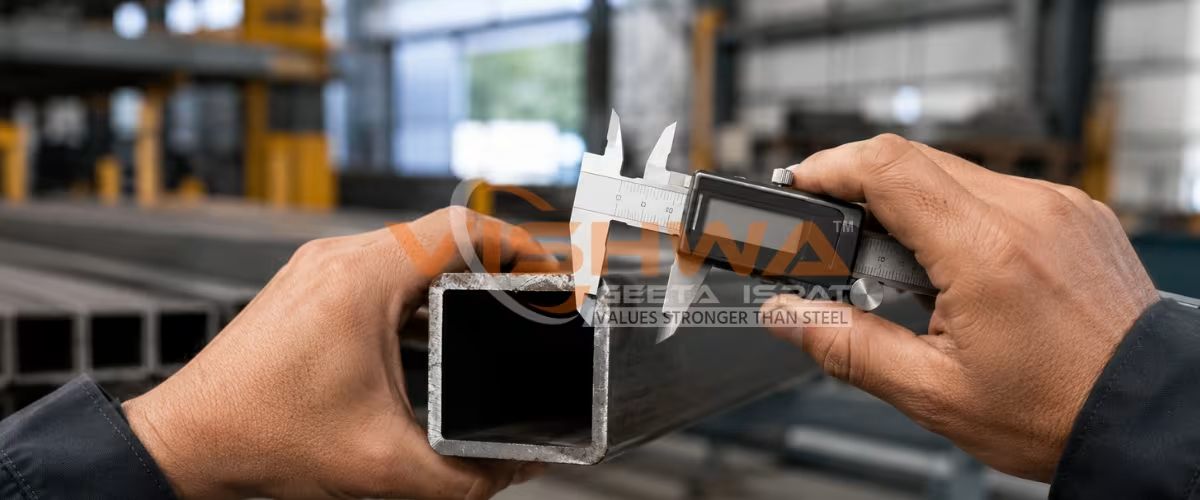
Fig 3 — A weight chart helps compare square pipe sizes and thickness before procurement, fabrication, and transport planning.
How to Calculate MS Square Pipe Weight
Step-by-Step Calculation • KG/M to Piece Weight • Total Project Weight
Let’s calculate the weight of 50×50×2.5 mm MS square pipe. This is one of the common sizes used in gates, frames, furniture fabrication, and light structural work.
Weight = 0.0314 × 2.5 × (50 − 2.5)
Weight = 0.0314 × 2.5 × 47.5
Weight ≈ 3.73 kg/m
One 6-meter length ≈ 3.73 × 6 = 22.38 kg per piece
40×40×2 mm Example
From the chart, 40×40×2 mm square pipe is approximately 2.39 kg/m. One standard 6-meter length will be around 14.34 kg. If your project requires 200 pieces, the estimated total weight will be around 2868 kg, or about 2.87 MT.
100×100×4 mm Example
From the chart, 100×100×4 mm square pipe is approximately 12.06 kg/m. One 6-meter piece will be around 72.36 kg. For 50 pieces, your estimated requirement becomes 3618 kg, or about 3.62 MT.
For quotation comparison, always check three things together: size, thickness, and actual weight. A lower rate may not be truly cheaper if the supplied thickness or actual weight is lower than expected.
Common Applications of MS Square Pipe
Fabrication • Construction • Industrial Structures • Commercial Use
MS square pipes are selected because they are easy to cut, weld, drill, paint, and fabricate. They also give a cleaner finish compared to many open sections. For projects where both appearance and strength matter, square pipes are a practical option.
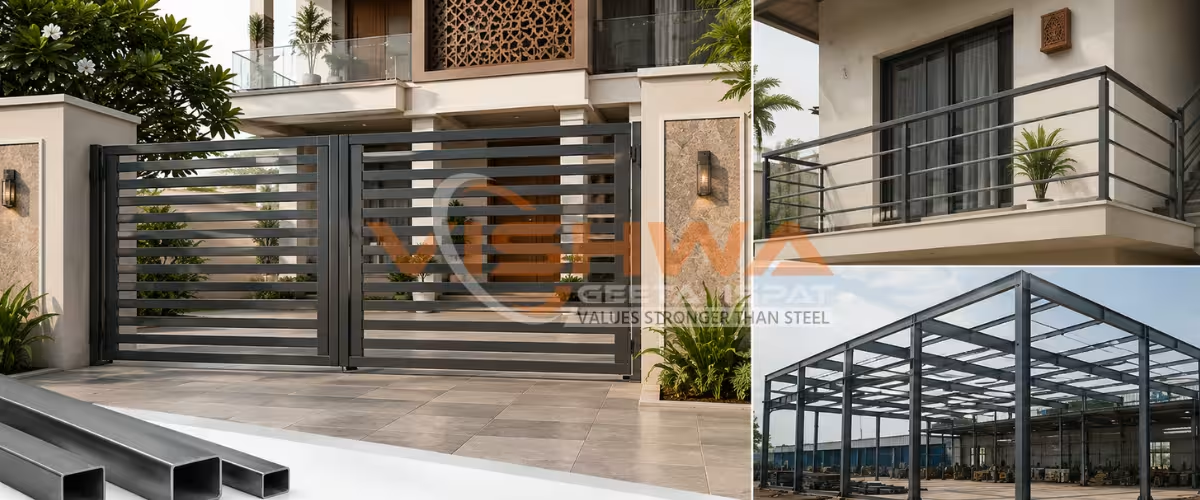
Fig 4 — MS square pipes are widely used in fabrication because they provide a clean profile with practical strength.
Gates & Railings
Square pipes are commonly used for residential gates, commercial gates, compound railings, staircase railings, balcony frames, and decorative fabrication work.
Industrial Frames
Machine supports, equipment frames, partition frames, work benches, and utility supports often use square hollow sections because they are easy to fabricate and modify.
Sheds & Structures
For light sheds, roof supports, display structures, shop fronts, signage frames, and temporary structures, square pipes are selected for their balance of cost and usability.
Furniture & Interiors
Industrial furniture, tables, racks, partitions, display counters, and modular interiors use square pipes where a straight, modern, minimal profile is required.
How to Buy MS Square Pipe Correctly
Thickness • Tolerance • Weight • Surface Finish • Supplier Reliability
Buying MS square pipe is not only about checking the rate per kg. The correct purchase decision depends on the required thickness, project application, expected load, coating or painting requirement, actual weight, and supply reliability. Here’s the thing: two pipes can look similar from the outside but perform very differently if thickness or grade is different.
Confirm Thickness
Always confirm whether the quoted material is 1.6 mm, 2.0 mm, 2.5 mm, 3.0 mm, or heavier. Thickness directly affects weight, strength, price, and project performance.
Check Actual Weight
Compare chart weight with actual weight. Variation is normal, but large differences should be checked before final acceptance or project use.
Inspect Surface Condition
Look for excessive rust, dents, bends, weld defects, uneven edges, or damaged bundles. Clean material reduces fabrication rework.
Match Application
Light decorative use and heavy structural use should not be treated the same. Choose size and thickness as per load, span, and engineering requirement.
Calculate Total MT
Before order placement, multiply kg/m by total running meter. This gives estimated MT requirement and helps plan transport and unloading.
Choose Reliable Supplier
A reliable supplier helps with size availability, dispatch planning, loading support, and confirmed rates, especially when market prices move quickly.
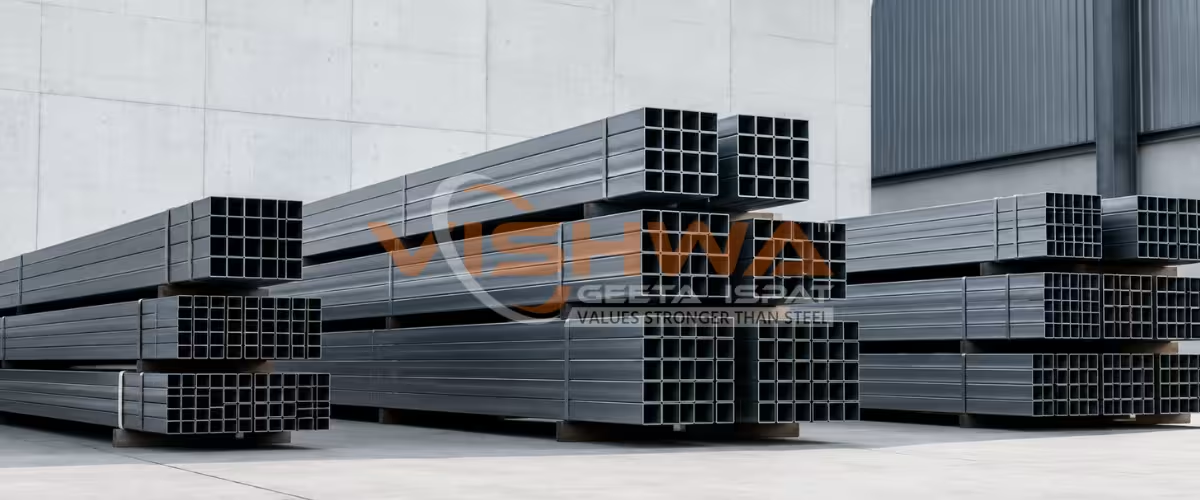
Fig 5 — Thickness and actual weight verification are important before using square pipe in fabrication or structural work.
✅ Good Buying Practice
- Ask for exact size and thickness before confirming rate
- Calculate kg/m and total running meter requirement
- Confirm availability before committing project timeline
- Use actual weighment for final billing verification
- Keep some buffer for cutting loss and fabrication wastage
⚠ Common Mistakes to Avoid
- Comparing only rate without comparing thickness
- Assuming all square pipes of same outside size have same weight
- Ignoring tolerance and actual supplied weight
- Ordering without checking standard length and cutting plan
- Using light thickness for load-bearing work without engineering approval
MS Square Pipe Weight Chart — FAQ
For Fabricators, Contractors, Traders and Steel Buyers
Vishwageeta Ispat — Raipur, Chhattisgarh
Vishwageeta Ispat is a trusted steel supplier from Raipur, serving contractors, builders, fabricators, traders, industries, and infrastructure buyers across India. We supply MS square pipes, rectangular pipes, round pipes, GI pipes, TMT bars, MS angles, channels, beams, plates, sheets, wire rod, binding wire, and other steel products with reliable availability and practical procurement support.
For current MS square pipe rates, thickness availability, loading support, and dispatch planning, contact our team directly. In steel buying, the right material at the right weight matters. We help you buy with clarity.