
I Beam Size Chart: Standard I Beam Sizes, Dimensions & Buying Guide
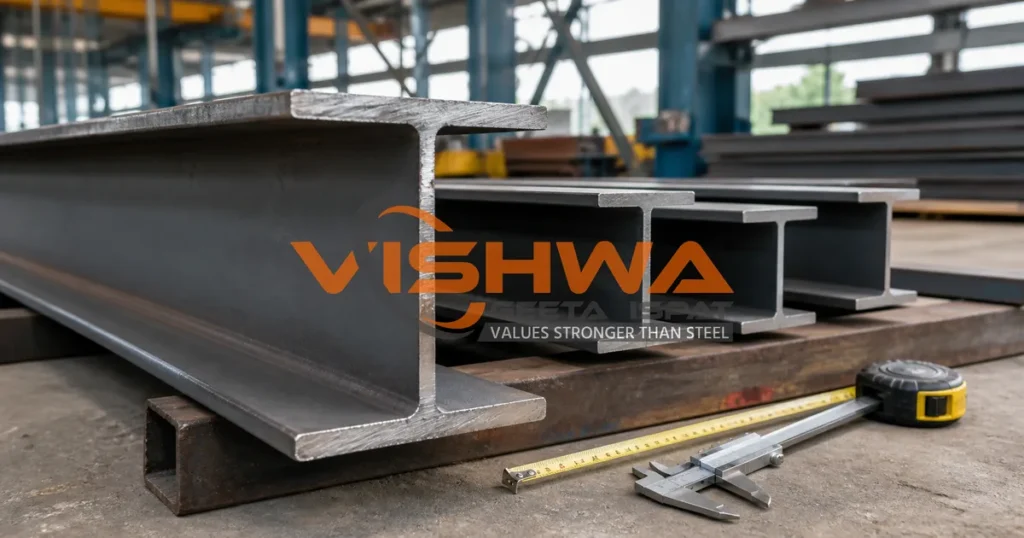
I beam size chart is one of the easiest ways to compare different structural steel sections before buying. When a buyer, contractor, fabricator or engineer says ISMB 200, ISMB 300 or ISMB 400, the number usually refers to the approximate depth of the beam in millimetres. But the full size is not only depth. Flange width, web thickness, flange thickness and weight per metre also matter.
This simple guide explains how to read an I beam size chart and what to check before ordering material for building, shed, platform, fabrication or industrial work.
What Is an I Beam?
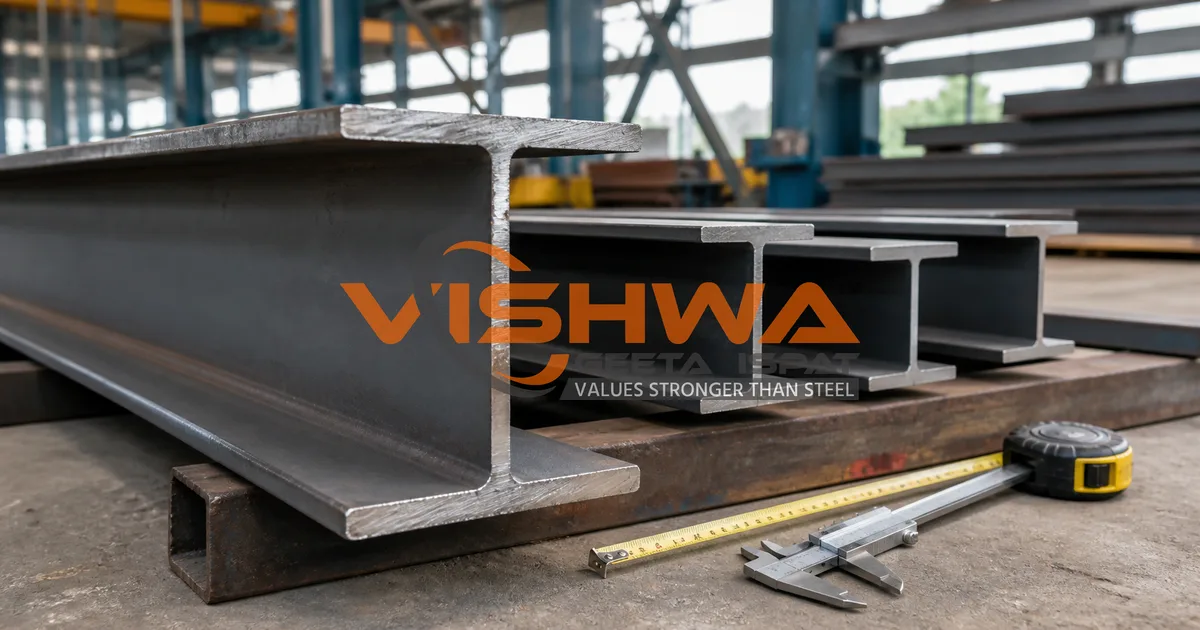
An I beam is a structural steel member shaped like the letter I. It has two horizontal parts called flanges and one vertical centre part called the web. This shape gives good strength for bending and is widely used in sheds, buildings, platforms, bridges, support frames, mezzanine floors and fabrication work.
I Beam Size Chart: Common ISMB Sizes
In India, many common I beam sections are referred to by ISMB sizes. The exact dimensions should always be checked from the latest standard or supplier data sheet, but the chart below gives a practical buying reference.
| I Beam Size | Approx. Depth | Common Use |
|---|---|---|
| ISMB 100 | 100 mm | Light fabrication, small supports |
| ISMB 150 | 150 mm | Frames, small structures, supports |
| ISMB 200 | 200 mm | Sheds, mezzanine work, general construction |
| ISMB 250 | 250 mm | Medium spans, platforms, industrial fabrication |
| ISMB 300 | 300 mm | Primary beams, warehouse and shed structures |
| ISMB 350 | 350 mm | Heavy supports and industrial structures |
| ISMB 400 | 400 mm | Large spans, heavy construction, industrial use |
| ISMB 450 to ISMB 600 | 450-600 mm | Heavy-duty structures, crane support and infrastructure work |
How to Read an I Beam Size Chart
When checking a size chart, look at these points carefully:
- Depth: Overall height of the beam.
- Flange width: Width of the top and bottom horizontal plate.
- Web thickness: Thickness of the vertical centre part.
- Flange thickness: Thickness of the top and bottom flanges.
- Weight per metre: Important for price, transport and lifting planning.
Why I Beam Size Is Important
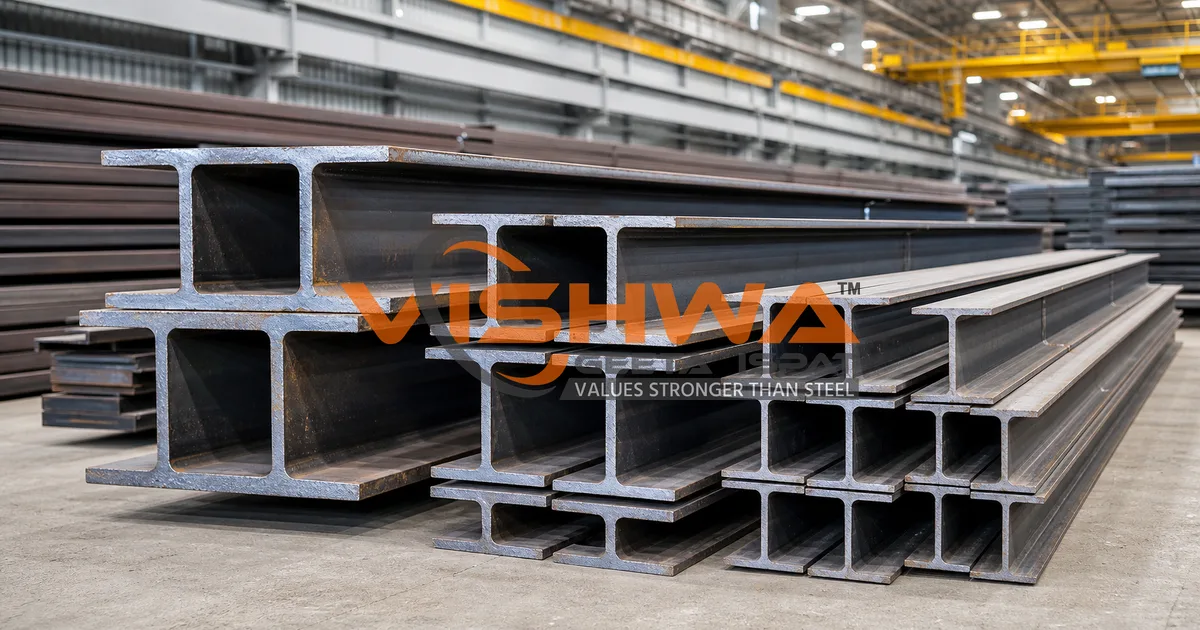
The right I beam size affects strength, safety, cost and installation. A beam that is too light may bend or deflect under load. A beam that is too heavy can increase project cost and dead load. That is why the size should match the drawing, load requirement and engineer recommendation.
I Beam Size vs I Beam Weight
Size and weight are connected, but they are not the same thing. Two beams may look similar in depth, but their flange width or thickness can change the weight. Since steel is usually priced by kg or tonne, weight per metre directly affects the final cost.
Buying Tips Before Ordering I Beam
- Confirm the exact section name, such as ISMB 200 or ISMB 300.
- Check length requirement before placing the order.
- Ask for current rate per kg or per tonne.
- Confirm delivery location and unloading arrangement.
- For structural use, take advice from a qualified engineer.
Final Words
An I beam size chart is useful because it gives a quick comparison of common beam sections. Before buying, do not check only the height of the beam. Confirm the full size, weight per metre, grade, length and application. For accurate supply and current rates, Vishwageeta Ispat can help you choose suitable structural steel sections for your project.