WHY THE H-BEAM SIZE CHART ACTUALLY MATTERS
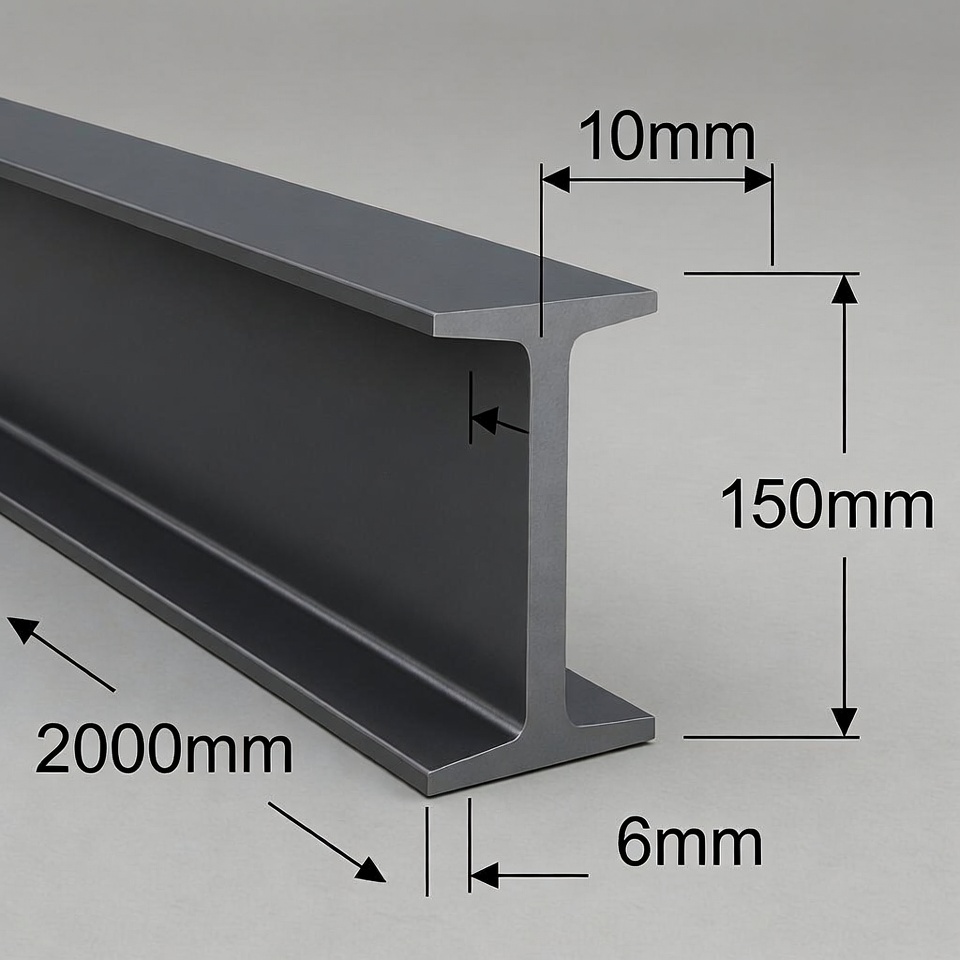
A beam can look strong. The size chart tells if it is actually right for the span, load, and safety margins.
Quick Navigation
- Why size charts matter
- What you find in a size chart
- Types of H-beams and chart usefulness
- How to read a chart without confusion
- How charts save money
- Role of H-beams in modern construction
- Common mistakes
- Future of H-beams and standards
- Why you should never ignore it
- Quick checklist before ordering
- FAQs
A H beam size chart looks simple, but it often decides the strength of the whole structure. People see a steel H-beam and think, “it will do the job.” In reality, section height, flange width, web thickness, and weight per meter change how a beam performs. One wrong size can increase stress and deflection where you don’t want it.
Companies like Vishwageeta (Vishwa Geeta Ispat) keep multiple sizes for exactly this reason—one size cannot do everything, and selecting without checking the chart usually creates trouble later.
WHAT YOU CAN FIND IN A H-BEAM SIZE CHART
A normal size chart lists the key dimensions and helps you compare options quickly. Typically, you will find:
- Height / depth (H): the vertical dimension that strongly influences span and bending resistance.
- Flange width (B): the top and bottom “arms” that improve stability and reduce twist.
- Web thickness (tw): the central thickness that affects shear and overall stiffness.
- Flange thickness (tf): contributes to compression capacity and connection strength.
- Weight per meter (kg/m): indicates material quantity and impacts cost and handling.
Practical point: Even a few millimeters change in web thickness can noticeably change load behavior, vibration response, and long-term deflection.
TYPES OF H-BEAMS AND WHY SIZE CHARTS ARE USEFUL
Not all H-beams are the same. Different series exist for different job types. Size charts help you choose the right series without guessing:
- Standard sections: common in building frames and general fabrication.
- Heavy sections: used for higher loads, larger spans, and demanding structures.
- Wide flange sections: chosen when stability and twist control are critical.
- Custom/optimized sections: used when design needs a specific ratio or connection layout.
A residential project may need a different flange/web ratio than a warehouse or bridge. Random selection may work initially, but in extreme load, wind, or vibration conditions, the wrong beam can bend earlier than expected.
HOW TO READ THE H-BEAM SIZE CHART WITHOUT GETTING CONFUSED
Reading a size chart becomes easy once you map the numbers to the section:
- Start with height (H) for span and vertical load behavior.
- Then check flange width (B) for stability and lateral performance.
- Then verify web thickness (tw) for shear and stiffness.
- Finally look at weight per meter to understand cost, transport, and handling limits.
Heavier beams can be stronger but harder to move and more expensive. Lighter beams are easier to handle but may not suit large spans or heavy loads. The chart helps balance performance and practicality.
WHY CHECKING THE H-BEAM SIZE CHART CAN SAVE MONEY
Size charts prevent the two most common cost mistakes:
| Decision | What happens | Money impact |
|---|---|---|
| Oversize “for safety” | Extra steel, higher dead load | More material + transport + sometimes heavier foundation needs |
| Undersize to save | Deflection, repairs, delays | Rework cost + downtime + safety risk |
Many mistakes happen because people assume “all H-beams are roughly the same.” They are not. The chart exists to prevent expensive guessing.
THE ROLE OF H-BEAMS IN MODERN CONSTRUCTION
H-beams are used in skyscrapers, bridges, warehouses, industrial sheds, platforms, and heavy fabrication. Correct dimensions affect stability, durability, and safety. The size chart works like a map—without it, selection becomes guesswork, which is risky for long-term performance.
COMMON MISTAKES PEOPLE MAKE WITH H-BEAMS
- Ignoring flange and web thickness and selecting only by “looks big enough.”
- Not considering span length and expected load changes.
- Skipping vibration and wind exposure checks in industrial/high-rise zones.
- Choosing weight per meter without checking whether the flange/web ratio matches the design.
- Relying on outdated size references instead of updated charts.
THE FUTURE OF H-BEAMS AND SIZE STANDARDS
Engineering is pushing limits—longer spans, lighter frames, stronger grades, and faster installation. That increases the need for precise charts not only for strength but also for transport and efficiency planning. Better tolerances and refined ratios are making selection more technical.
WHY YOU SHOULD NEVER IGNORE THE H-BEAM SIZE CHART
Even if a beam looks strong, always check the H beam size chart. Height, flange width, web thickness, and weight per meter together decide whether the beam is fit for purpose. Skipping this step can cause structural issues, financial waste, or delays.
Use charts from trusted manufacturers like Vishwageeta, and validate selection with a structural engineer when loads and spans are critical.
QUICK CHECKLIST BEFORE ORDERING H-BEAMS
- Confirm application: column / beam / shed / bridge / platform.
- Check span length, total load, and service conditions (wind/vibration).
- Match height (H) to span and bending requirements.
- Match flange width (B) to stability and joint constraints.
- Confirm web thickness (tw) and flange thickness (tf) for stiffness and connections.
- Verify weight per meter for cost, transport, and lifting limits.
Structural Steel • Steel Specifications & Standards • Contact & Enquiry
Need the Right H-Beam Size for Your Project?
Connect with Vishwa Geeta Ispat (Vishwageeta) for dependable supply and support on selecting H-beam sizes for buildings, warehouses, bridges, and fabrication works.
Frequently Asked Questions
Does a bigger H-beam always mean a safer structure?
No. Oversizing increases cost and dead load. Safety comes from the correct combination of height, flange width, web thickness, and verified design requirements.
What should I prioritize: height or flange width?
Height strongly affects span and bending resistance, while flange width improves stability and twist control. Both must match the structural design.
Is weight per meter enough to select an H-beam?
No. Weight helps estimate cost and handling, but the flange/web ratio and section depth decide performance.
When is an engineer check mandatory?
For long spans, heavy loads, bridges, industrial vibration zones, multi-storey structures, and critical safety applications—always validate selection with a structural engineer.
Conclusion
The H-beam size chart is not just a list of numbers. It is a performance map that helps you choose the right beam for strength, stability, cost control, and long-term safety. Checking the chart before ordering prevents delays, reduces waste, and protects the structure from avoidable stress.