Iron Ore Prices and Steel Market: What the Last 30 Days Signal for January
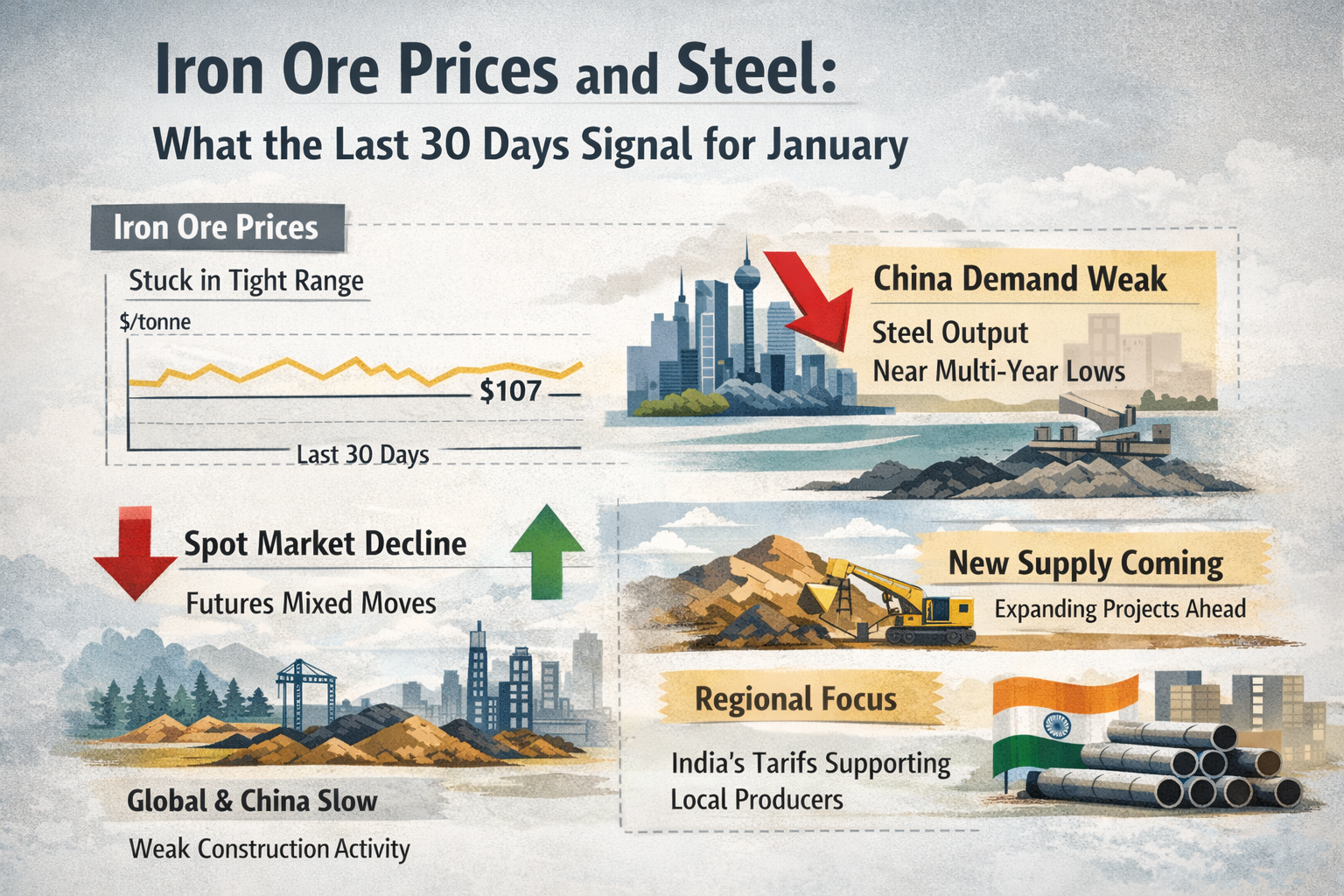
Upstream ore signals often flow into billet and TMT with a practical lag.
Quick Navigation
Iron ore prices and steel market movement should always be read together. If you buy or trade steel regularly, ore is not just an upstream number—it is an early signal that can influence billet, rebar, and TMT pricing after a short delay. In practical terms, ore trend sets tone, billets confirm direction, and finished steel rates follow.
Supported Range
The market has shown a firm base near key psychological levels with quick two-way swings.
Sentiment Sensitivity
Policy headlines can lift price expectations quickly, while weak demand headlines can pull them down.
Lag Effect
Downstream finished steel rates usually react after contracts and inventories roll through.
Iron Ore Prices and Steel Market in the Last 30 Days
In the recent 30-day window, the structure looked range-bound but supported. This matters because a supported ore band often allows mills to defend realizations instead of entering an aggressive price war. At the same time, futures action remained volatile, which indicates a sentiment-driven market rather than a clean one-way trend.
Therefore, buyers should avoid binary thinking. The better approach is to track levels and triggers each day, not just weekly headlines.
China Demand Narrative Inside the Steel Market
China still shapes the global narrative. On one side, property caution keeps demand expectations restrained. On the other side, policy support and infrastructure cues can improve market tone quickly. This push-pull setup can create sharp intraday and weekly moves in ore-linked pricing expectations.
- Policy optimism: Can support ore sentiment and stabilize billet expectations.
- Demand reality checks: Can trigger pullbacks and softer near-term pricing tone.
- Output discipline themes: Can reduce odds of uncontrolled supply expansion.
Supply-Side Triggers in the Steel Market
Supply guidance, shipment pace, and seaborne availability can reshape balance quickly. Even when demand is mixed, a tighter supply narrative can hold ore prices firmer than expected. Conversely, loose supply with weak demand can pressure upstream economics and eventually affect finished steel quotes.
Practical takeaway: do not read demand headlines in isolation. Always pair them with supply signals before projecting steel direction.
How Ore Flows into Billet and TMT
The transmission route is usually sequential: ore assumptions adjust first, then intermediate products reprice, then finished products reflect the change. That is why daily steel buying decisions are strongest when based on a lag-aware framework.
| Stage | Market Variable | What Usually Happens | Typical Timing |
|---|---|---|---|
| Upstream | Iron ore benchmarks + futures | Cost sentiment resets | Immediate |
| Midstream | Billet and melt-route economics | Primary trade quotes adjust | 1–3 weeks |
| Downstream | TMT / rebar delivered rates | Retail and project quotes reprice | 2–6 weeks |
January Steel Market Playbook
If the current setup continues, January may remain tactical. In that case, execution quality will come from disciplined tracking rather than prediction. Use scenario thinking:
- If ore remains supported and sentiment stays constructive, billets usually hold, and deep downside in TMT may remain limited.
- If ore breaks lower on clear demand weakness, billets often soften first, followed by TMT/rebar corrections after a lag.
- Delivered rates may move ahead of ex-plant rates if freight and diesel shift quickly.
Daily Buyer Checklist for the Steel Market
- Ore benchmark level + short-term momentum
- Futures tone and volatility
- Billet spread versus last week
- TMT and rebar regional movement
- Freight, diesel, and delivery lead-time impact
Steel Market Insights • Steel Price Updates • Buying Guides & Procurement • TMT Price Today • Contact & Enquiry
Need Daily Support on Steel Buying Decisions?
Vishwa Geeta Ispat helps you convert market signals into practical procurement actions with dependable supply coordination.
FAQs
Why should I track ore when I buy finished steel?
Ore is an early cost signal. It does not decide your final rate instantly, but it often shapes downstream direction with a lag.
Can TMT remain stable even during ore volatility?
Yes. Inventory cushion, contract structure, and mill strategy can delay or reduce immediate pass-through.
What is the biggest buying mistake in volatile weeks?
Relying on one headline. Better decisions combine ore trend, billet behavior, and local delivery economics.
How often should I refresh market checks?
Daily is ideal for active buying. Weekly review works for project pacing, but daily triggers prevent costly timing errors.
Conclusion
The key message is straightforward: iron ore prices and steel market direction are connected through a practical lag chain. Buyers who track upstream signals, validate with billet movement, and time downstream purchases carefully are usually better protected on cost and continuity.